



Nearly one-third of SA’s ecosystems under threat, freshwater systems at risk
Rivers, wetlands, and estuaries—essential for water supply, food systems, and ecological balance—are facing severe and increasing stress.
- Country:
- South Africa
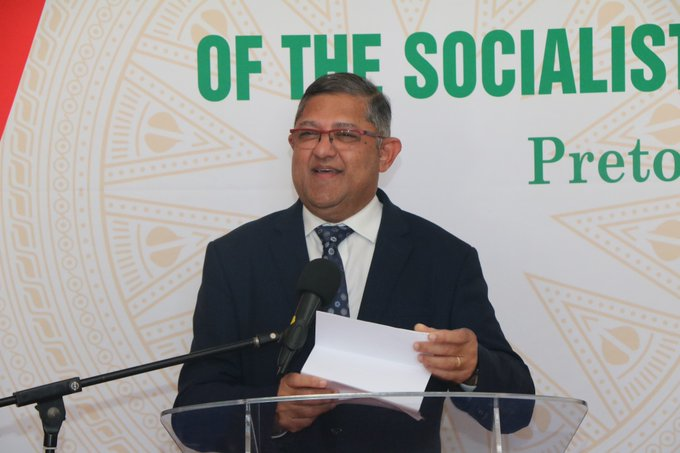
Deputy Minister of Forestry, Fisheries and the Environment, Narend Singh, has issued a strong call for intensified public-private collaboration to combat accelerating biodiversity loss, warning that environmental degradation is increasingly threatening the country's water security, economic stability, and long-term development.
Speaking at the Walter Sisulu National Botanical Garden in Johannesburg, Singh highlighted alarming findings from the latest National Biodiversity Assessment (NBA), which shows that nearly one-third of South Africa's terrestrial ecosystems are now classified as threatened.
Mounting pressures push ecosystems to the brink
The assessment paints a stark picture of mounting environmental pressures driven by:
-
Expanding agriculture and urban settlements
-
Mining and infrastructure development
-
Invasive alien species
-
Pollution and overexploitation of natural resources
-
Climate change impacts
"Pressures on biodiversity are intensifying… driving ecosystem degradation and species decline," Singh said, adding that freshwater ecosystems are among the hardest hit.
Freshwater systems in critical condition
Rivers, wetlands, and estuaries—essential for water supply, food systems, and ecological balance—are facing severe and increasing stress.
South Africa's Water Source Areas, which include mountain catchments, wetlands, and river systems, are particularly critical:
-
They cover just 10% of the country's land area
-
Yet they supply more than 50% of national water needs
Despite their importance, these areas are under threat from pollution, invasive species, and altered water flows.
"These areas face severe pressure… far more urgent action is required to protect this vital ecological infrastructure for water security," Singh warned.
The degradation of freshwater systems also has cascading impacts on marine ecosystems, fisheries, and coastal resilience, underscoring the interconnected nature of South Africa's environmental systems.
Targeted investment needed for maximum impact
Given limited resources and widespread environmental pressures, Singh emphasised the need for strategic spatial prioritisation—directing investment toward areas where restoration efforts can deliver the greatest ecological and economic returns.
Priority zones include:
-
Degraded wetlands
-
Estuaries and river systems
-
Coastal and marine environments
Experts note that restoring these ecosystems not only protects biodiversity but also supports livelihoods, agriculture, tourism, and disaster resilience.
Signs of progress—but more action required
While the overall outlook remains concerning, the Deputy Minister pointed to positive outcomes in certain areas.
Some species have shown improved conservation status due to protected areas and stewardship programmes—demonstrating that sustained, well-funded conservation efforts can yield tangible results.
"These successes prove what is possible when conservation efforts are sustained and well-supported," Singh said.
However, he cautioned that isolated successes are not enough to offset broader ecosystem decline.
Private sector seen as key partner in conservation
A central theme of Singh's address was the critical role of the private sector in scaling up conservation efforts.
He stressed that meaningful progress will depend on:
-
Policy reform and regulatory alignment
-
Increased investment in environmental restoration
-
Strong partnerships across government, business, and civil society
"Public–private partnerships have proven powerful, enabling the private sector to drive investment, create jobs, and advance shared goals," he said.
Businesses are increasingly being encouraged to integrate sustainability into their operations through Environmental, Social and Governance (ESG) frameworks—tools that measure and report on environmental impact, social responsibility, and governance practices.
Unlocking ESG-driven investment
Singh highlighted the potential of ESG frameworks to unlock sustainable finance and drive corporate accountability.
These frameworks allow companies and investors to:
-
Assess environmental risks such as carbon emissions and biodiversity loss
-
Monitor social indicators including labour practices
-
Evaluate governance standards such as transparency and board diversity
By standardising sustainability reporting, ESG frameworks make it easier to attract investment and align business strategies with national development goals.
Regulatory reform and institutional strength critical
The Deputy Minister also underscored the need to modernise environmental governance systems to support faster, more transparent decision-making.
"Sound environmental governance requires modernising our regulatory frameworks to make them more efficient and aligned with the objectives of people, planet and prosperity," he said.
Strong institutions—both public and private—are essential for implementing policies, enforcing compliance, and building trust.
Call to invest in national conservation assets
In a direct appeal to the business community, Singh called for partnerships to support South Africa's network of national botanical and zoological gardens.
These institutions play a vital role in:
-
Biodiversity conservation and research
-
Environmental education and awareness
-
Tourism and local economic development
"Your support can expand these spaces, improve visitor experiences, advance research and education, and contribute directly to national biodiversity targets," he said.
A whole-of-society response required
As biodiversity loss accelerates globally, South Africa's response is increasingly framed as a collective national effort.
"A collaborative, whole-of-society approach to conserving our natural assets will be central to achieving our social and economic development goals," Singh said.
With ecosystems underpinning water security, food systems, and economic activity, the stakes are high.
The message from government is clear: without urgent, coordinated action—backed by investment and innovation—South Africa risks losing the very natural systems that sustain its people and economy.
ALSO READ
-
Strengthening Biodiversity: New Measures for Biological Diversity Act, 2002
-
Bat Biodiversity Under Siege: India's Ecosystem Saviors at Risk
-
Discovering Nandhaur: A New Gateway to Biodiversity and History
-
Explore Nature: Nandhaur's Biodiversity Gallery Opens
-
SA Calls for Global Equity in Biodiversity Benefits as DSI Talks Advance







 Google News