



SA Calls for Global Equity in Biodiversity Benefits as DSI Talks Advance
Singh pointed to South Africa’s own Access and Benefit-Sharing (ABS) framework as a global example of best practice.
- Country:
- South Africa
South Africa has intensified its push for a fairer global system governing the use of genetic resources, with Deputy Minister of Forestry, Fisheries and the Environment Narend Singh urging nations to ensure equitable benefit-sharing from biodiversity—particularly for Indigenous communities and developing regions.
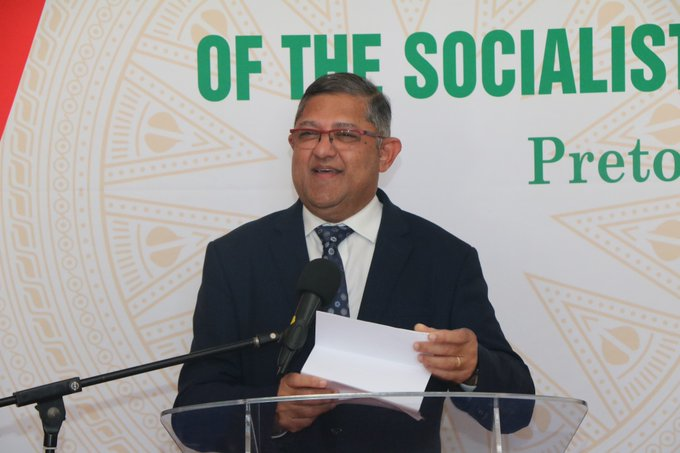
Speaking at the opening of the third Steering Committee meeting on the multilateral mechanism for Digital Sequence Information (DSI) at Kirstenbosch National Botanical Gardens on Tuesday, Singh positioned the discussions as a critical turning point in global biodiversity governance.
Biodiversity Wealth Meets Global Inequality
Addressing international delegates gathered in the heart of the Cape Floristic Region—one of the world's richest biodiversity hotspots—Singh highlighted the stark imbalance between those who conserve biodiversity and those who profit from it.
"This setting reminds us not only of the immense value of biodiversity, but also of our shared responsibility to ensure its benefits are distributed equitably," he said.
He stressed that Africa's biodiversity is deeply intertwined with livelihoods, cultural heritage, and identity, making the stakes of the discussions particularly high for communities that have protected these resources for generations.
Digital Sequence Information: A New Frontier in Global Negotiations
At the centre of the meeting is the rapidly evolving issue of Digital Sequence Information (DSI)—genetic data derived from plants, animals, and microorganisms that is increasingly used in scientific research, pharmaceuticals, agriculture, and biotechnology.
While DSI has unlocked new possibilities for innovation, it has also raised complex questions about ownership, access, and compensation—particularly when genetic data originates from biodiversity-rich but economically disadvantaged regions.
Singh emphasised that decisions taken by the Steering Committee will have real-world implications, especially for Indigenous peoples and local communities whose knowledge and stewardship underpin much of this biodiversity.
Cali Fund: A Milestone Toward Fairness
Reflecting on outcomes from the 2024 UN Biodiversity Conference (CBD COP16), Singh described the agreement to establish a multilateral mechanism for DSI—including the creation of the Cali Fund—as a major breakthrough.
The fund is designed to ensure that benefits generated from the use of genetic data are shared more fairly across countries and communities, while also encouraging greater accountability from corporations and research institutions.
"This represents a milestone in addressing long-standing inequities in how biodiversity benefits are distributed," Singh said.
South Africa's Leadership in Benefit-Sharing
Singh pointed to South Africa's own Access and Benefit-Sharing (ABS) framework as a global example of best practice. The system aligns with key international agreements, including the Convention on Biological Diversity (CBD) and the Nagoya Protocol, and facilitates equitable partnerships between researchers, companies, and local communities.
This framework has enabled the country to ensure that communities receive both monetary and non-monetary benefits when their biological resources or traditional knowledge are used commercially.
South Africa's leadership role in advancing global dialogue on DSI dates back nearly a decade. Singh traced the issue to 2016, when DSI first gained prominence under the CBD, and highlighted South Africa's collaboration with Norway in initiating global discussions in 2019.
Key consultations hosted in Pretoria helped build consensus that ultimately contributed to the agreement reached at COP16 in Cali.
Addressing Historical Injustice in Biodiversity Use
Beyond the technical dimensions, Singh underscored the historical context of the debate. For decades, Indigenous knowledge and biological resources from the Global South have been utilised in sectors such as medicine, agriculture, and cosmetics—often without recognition or compensation.
"In the African context, benefit-sharing is not only a technical issue but also a historical one," he said.
The Deputy Minister argued that the development of the DSI mechanism and the operationalisation of the Cali Fund present a unique opportunity to correct these injustices and establish a more inclusive global system.
Linking Conservation with Economic Justice
Singh emphasised that equitable benefit-sharing is essential not only for justice but also for conservation. Ensuring that communities benefit directly from biodiversity creates incentives to protect ecosystems and sustain natural resources.
He added that South Africa's experience demonstrates how responsible use of genetic resources can deliver tangible socio-economic benefits while supporting conservation goals.
Toward a Fair and Inclusive Global Framework
As negotiations continue, South Africa is positioning itself as a key advocate for a balanced approach—one that promotes scientific innovation while safeguarding the rights and interests of biodiversity-rich nations and communities.
Singh expressed optimism that the Steering Committee's work will help shape a multilateral mechanism that is fair, transparent, and effective.
"This is an opportunity to ensure that both monetary and non-monetary benefits reach the communities that have safeguarded biodiversity for generations," he said.
With global attention increasingly focused on biodiversity loss and sustainable development, the outcomes of the Kirstenbosch meeting could play a pivotal role in defining how the world shares the value of nature in the years ahead.
ALSO READ
-
China’s Biodiversity Challenge: Turning Protected Land into Real Conservation Gains
-
India Adopts Mission-Mode Approach to Ocean Conservation: Deep Ocean Mission Drives Marine Biodiversity Protection
-
Rise in IPR Filings Reflects Stronger Biodiversity Act
-
India Emerges as Global Leader in Biodiversity Compliance, Accounts for 56% of Nagoya Protocol Certificates
-
Unveiling the Hidden Gem: Odonate Biodiversity in Sikkim Himalayas








 Google News