



SA Unveils Skills Reform Plan to Tackle Unemployment and Prepare Workforce for AI Era
“These goals are designed to ignite renewal and ensure that our people live and work with dignity in a changing world,” Mashatile said.
- Country:
- South Africa
In a decisive move to address rising unemployment and future-proof its workforce, the South African government has launched a comprehensive long-term strategy aimed at aligning education and skills development with the demands of a rapidly evolving, technology-driven economy.
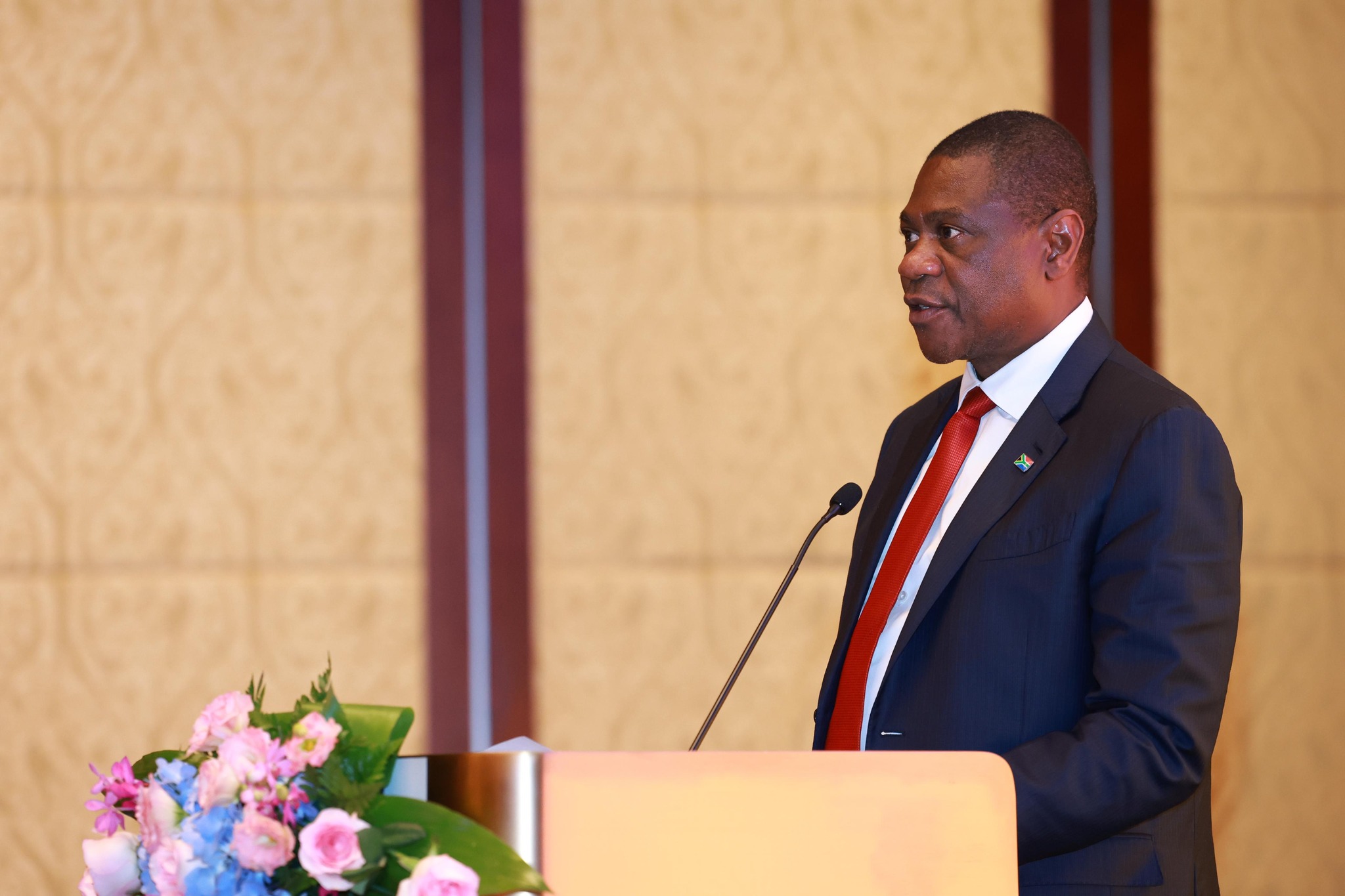
Deputy President Paul Mashatile announced the Reconceptualised Human Resource Development Strategy (HRD Strategy) 2025–2035 alongside its implementation blueprint, the Master Skills Plan (MSP) 2025–2030, at the 5th Human Resource Development Council (HRDC) Summit in Johannesburg. The twin frameworks are designed to transform South Africa's skills ecosystem, reduce unemployment, and bridge widening gaps between education outcomes and labour market needs.
A System Under Pressure from Rapid Change
Mashatile highlighted that South Africa is confronting a convergence of disruptive forces—including automation, artificial intelligence, demographic shifts, and climate change—that are reshaping how people learn, work, and earn.
"Automation and AI are transforming industries at a speed that often exceeds the ability of education systems to respond," he said, warning that the resulting skills mismatch threatens both workforce readiness and long-term economic stability.
He stressed that the country must urgently rethink not only job-specific skills but also broader human capabilities to remain competitive in a fast-changing global landscape.
Four Catalytic Goals to Drive Systemic Transformation
At the core of the new strategy are four "catalytic goals" designed to trigger system-wide impact:
-
Strengthening early learning and schooling outcomes, recognising that foundational education shapes lifelong opportunities
-
Boosting employability of youth not in employment, education, or training (NEET) through short courses, entrepreneurship, and work-based learning
-
Aligning post-school education with emerging sectors, particularly the green, digital, and care economies
-
Building a capable, ethical, and developmental state, seen as essential for sustaining reforms
"These goals are designed to ignite renewal and ensure that our people live and work with dignity in a changing world," Mashatile said.
From Planning to Implementation: A Critical Shift
Acknowledging past shortcomings, the Deputy President noted that South Africa does not lack policy frameworks but struggles with execution.
"Our vulnerability lies in implementation gaps, weak coordination, and uneven ownership," he said, calling for urgent action to translate plans into measurable outcomes.
The newly launched HRD Strategy and MSP are intended as "living instruments," with clear accountability mechanisms to ensure progress over the next decade. The HRD Council has been tasked with intensifying its role as a central coordinating body—driving partnerships, resolving bottlenecks, and monitoring delivery on the ground.
Youth at the Centre of Reform
A major focus of the strategy is tackling youth unemployment, which remains one of South Africa's most pressing socio-economic challenges. Millions of young people, particularly discouraged job seekers, have disengaged from the labour market entirely.
Mashatile described this as not just an economic issue but a human one: "Exclusion from work represents a loss of dignity, purpose, and hope."
The strategy aims to re-engage youth by creating flexible, accessible pathways into employment—combining education, skills training, and entrepreneurship support.
Beyond Technical Skills: A New Capability Framework
The Deputy President emphasised that traditional technical skills alone are no longer sufficient in today's volatile environment. Instead, the future workforce must be equipped with a broader set of human and social capabilities, including:
-
Analytical thinking and problem-solving
-
Communication and collaboration
-
Creativity and innovation
-
Resilience and adaptability
-
Ethical leadership and critical thinking
This shift reflects a growing global consensus that success in the AI era depends as much on human capabilities as on technical expertise.
Aligning Education with Emerging Economies
The strategy places strong emphasis on preparing South Africans for opportunities in fast-growing sectors such as:
-
Green economy (renewable energy, sustainability)
-
Digital economy (AI, data, tech services)
-
Care economy (healthcare, social services)
By aligning education and training systems with these sectors, the government aims to create a more responsive and future-ready workforce.
A Decade-Long Vision for Inclusive Growth
The HRD Strategy 2025–2035 represents a long-term vision to build an inclusive, skilled, and adaptable workforce capable of driving economic growth and social transformation.
Mashatile concluded with a call for urgency and collective responsibility:
"We need to get things done with no procrastination… Our responsibility is to ensure that South Africans, especially the youth, are not passive victims of change but active shapers of their futures."
As South Africa embarks on this ambitious reform journey, the success of the strategy will hinge not just on policy design but on effective implementation—turning vision into tangible opportunities for millions.








 Google News