



SA Ramps Up Foot-and-Mouth Disease Vaccination Drive
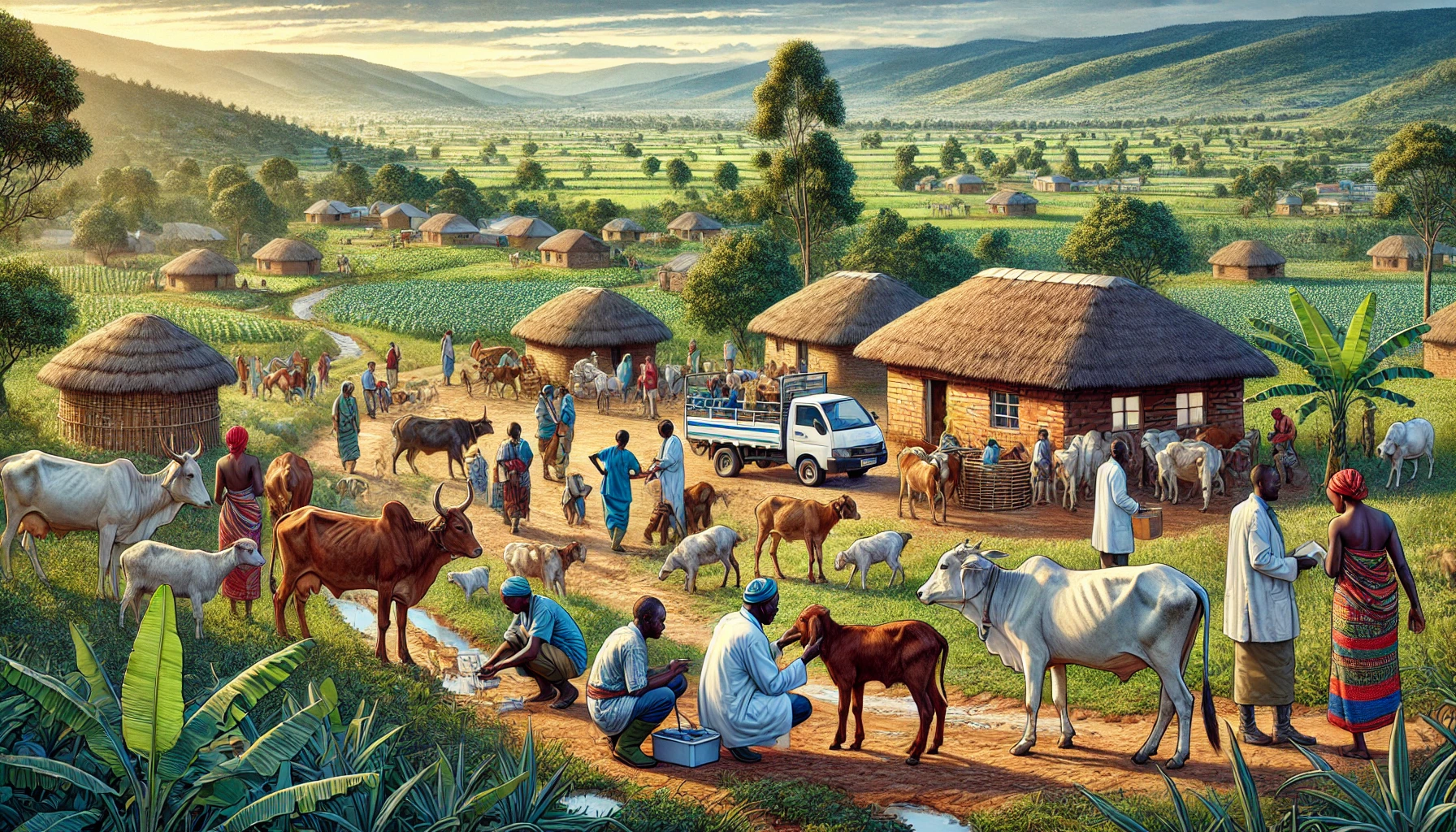
The campaign is being rolled out across high-risk and affected regions, with veterinary teams working directly with farmers to contain outbreaks and prevent further spread.
- Country:
- South Africa
South Africa has intensified its fight against the highly contagious Foot-and-Mouth Disease (FMD), launching a nationwide vaccination campaign as part of a coordinated effort to protect livestock, safeguard food security, and stabilise the agricultural economy.
The Department of Agriculture's response—supported by provincial authorities, researchers, and industry stakeholders—marks one of the most comprehensive animal health interventions in recent years, following the declaration of FMD as a national state of disaster.
Mass Vaccination Campaign Targets Millions of Livestock
The campaign is being rolled out across high-risk and affected regions, with veterinary teams working directly with farmers to contain outbreaks and prevent further spread.
FMD affects cloven-hoofed animals such as:
-
Cattle
-
Sheep
-
Goats
-
Pigs
While the disease poses no direct threat to human health, its economic impact is severe, disrupting:
-
Livestock farming operations
-
Food supply chains
-
Export markets for animal products
South Africa faces a significant immunisation challenge, with an estimated:
-
14 million cattle requiring vaccination
-
28 million vaccine doses needed over the next 12 months
Breakthrough: First Locally Produced Vaccine in Over 20 Years
In a major scientific and industrial milestone, South Africa has produced its first batch of FMD vaccines since 2005, signalling a decisive shift toward local vaccine manufacturing.
The Agricultural Research Council (ARC), through its Onderstepoort Veterinary Research facility, has:
-
Completed an initial batch of 12,900 locally produced vaccines
-
Restarted domestic production after decades of reliance on imports
This breakthrough addresses long-standing challenges caused by outdated infrastructure that previously failed to meet international manufacturing standards.
Scaling Up: From 20,000 to 200,000 Doses Per Week
Government has outlined an ambitious production roadmap:
-
20,000 doses per week by end of March 2026
-
Scaling up to 200,000 doses per week in the following phase
To support this expansion, plans are underway to construct a R1.6 billion high-containment vaccine production facility, designed to meet global pharmaceutical and biosecurity standards.
The new facility is expected to:
-
Take 36 months to build and 12 months to validate
-
Enable large-scale, sustainable vaccine production
-
Reduce long-term dependence on imports
Complex Science Behind Vaccine Development
The development of the FMD vaccine is a highly specialised and time-intensive process involving:
-
Collection of virus samples from infected animals
-
Culturing viruses in controlled laboratory environments
-
Genetic characterisation and safety testing
-
Inactivation of the virus to eliminate infectivity
-
Multi-phase trials in both laboratory and field conditions
Researchers highlight that vaccine development can take 5–10 years or longer, requiring strict safety validation before deployment.
The locally produced vaccine offers a significant advantage:
-
Immunity lasting up to 12 months, compared to 4–6 months for some alternatives
Biosecurity and Movement Controls Strengthened
The vaccination drive forms part of a broader containment strategy that includes:
-
Strict animal movement controls
-
Enhanced farm biosecurity measures
-
Ongoing surveillance and testing
Authorities have warned that lapses in movement control—particularly illegal movement of livestock—have contributed to the spread of the disease.
Farmers are urged to:
-
Report suspected cases immediately
-
Avoid introducing animals without verified health certification
-
Comply with quarantine and vaccination protocols
Economic Stakes: Protecting Trade and Market Access
FMD outbreaks carry significant economic consequences, particularly for export-driven sectors.
When outbreaks occur:
-
Countries may suspend imports of South African animal products
-
Farmers risk losing access to international markets
-
Domestic supply may increase, but at the cost of reduced export revenue
Despite these risks, authorities assure that:
-
Local meat and milk supply will remain stable
-
Infected animals typically recover and re-enter the food chain
Public-Private and Scientific Collaboration Key
The response highlights strong collaboration between:
-
Government departments
-
Research institutions
-
Veterinary services
-
Farming communities
South Africa is also continuing to import vaccines from countries such as Argentina and Türkiye, while scaling local production to ensure immediate supply.
All imported vaccines undergo strict regulatory approval and testing to ensure safety and effectiveness.
Free Vaccination and State-Controlled Distribution
FMD remains a state-controlled disease, meaning:
-
Vaccines are not sold directly to farmers
-
Government coordinates distribution and administration
-
Vaccination is heavily subsidised or provided at no cost
Farmers must report outbreaks to local veterinary authorities, who will:
-
Assess the situation
-
Administer vaccines
-
Enforce movement restrictions
Building Long-Term Resilience
The intensified vaccination campaign reflects a broader strategic goal: building national resilience against animal diseases.
Key priorities include:
-
Achieving vaccine self-sufficiency
-
Strengthening scientific and manufacturing capacity
-
Bridging the gap between research and commercial production
The ARC has also invested in training a new generation of scientists, many of whom are now pursuing advanced research in vaccine development.
Outlook: A Turning Point for Agricultural Biosecurity
As the vaccination campaign gains momentum, early field reports indicate encouraging results, with vaccines already being deployed across multiple provinces.
While challenges remain—particularly in scaling production to meet national demand—the combination of local innovation, coordinated response, and infrastructure investment signals a turning point in South Africa's ability to manage animal disease outbreaks.
The success of this initiative will be critical not only for protecting livestock but also for preserving the country's agricultural economy and food security in the years ahead.








 Google News