



WHO Unveils Faster, Cheaper TB Tests to Close Global Diagnosis Gap
Tuberculosis remains one of the world’s deadliest infectious diseases, claiming around 1.3 million lives annually and infecting over 10 million people each year, according to WHO estimates.
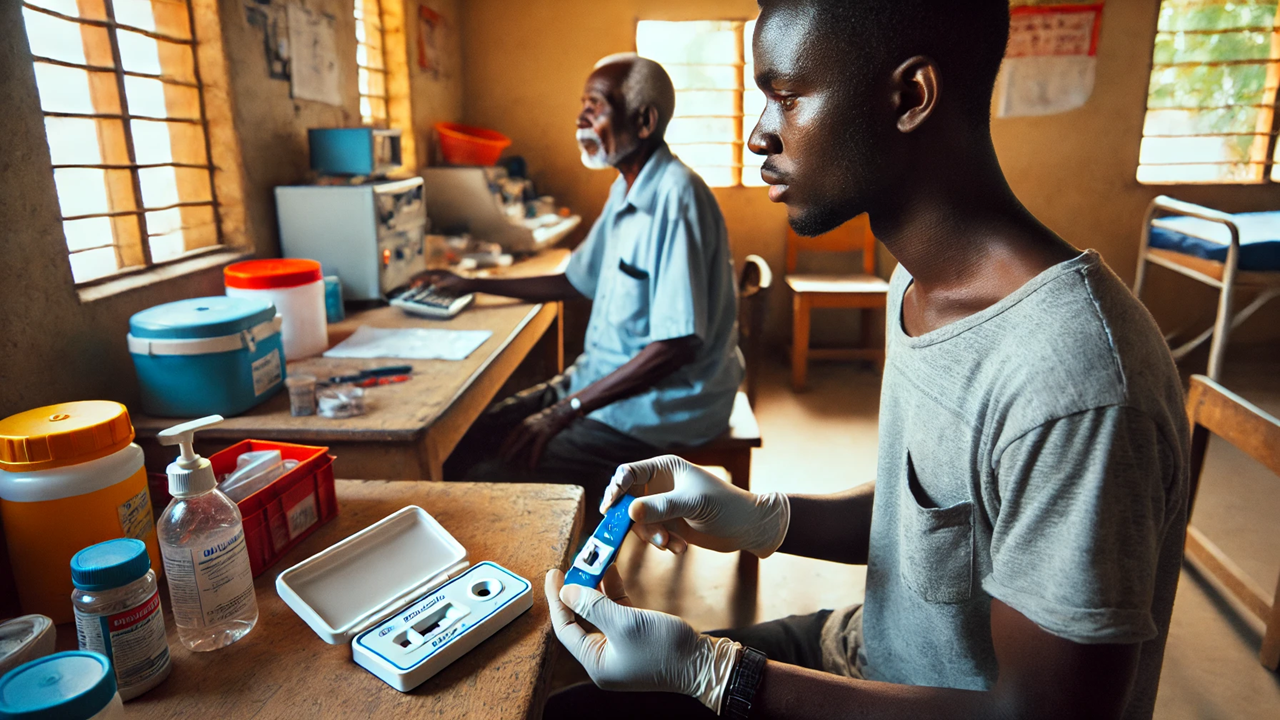
The World Health Organization (WHO) has issued new global recommendations aimed at transforming tuberculosis (TB) diagnosis, introducing innovative testing technologies, easier sample collection methods, and cost-saving strategies designed to expand access to early detection.
The updated guidance includes, for the first time, recommendations for near-point-of-care molecular tests, tongue swab sampling, and a sputum pooling testing strategy, all intended to speed up diagnosis and improve access in resource-limited settings.
"These new WHO recommendations mark a major step forward in making TB testing faster and more accessible," said Dr Tereza Kasaeva, Director of WHO's Department for HIV, TB, Hepatitis & STIs.
"WHO urges countries and partners to work together to roll out these guidelines to close persistent diagnostic gaps and ensure that everyone with TB can be diagnosed early and start life-saving treatment without delay."
Persistent Global TB Diagnosis Gap
Tuberculosis remains one of the world's deadliest infectious diseases, claiming around 1.3 million lives annually and infecting over 10 million people each year, according to WHO estimates.
Despite global commitments under the WHO End TB Strategy and the United Nations High-Level Meeting on TB, millions of cases still go undetected or are diagnosed too late.
Health systems in many countries face significant barriers, including:
-
Dependence on sputum samples, which many patients—especially children and severely ill individuals—struggle to produce
-
Limited availability of laboratory-based molecular tests in rural or community health settings
-
High costs associated with diagnostic equipment and testing infrastructure
These challenges have left large diagnostic gaps, particularly in low- and middle-income countries where TB remains most prevalent.
New Near-Point-of-Care Molecular Tests
One of the most significant changes in the new recommendations is the introduction of a new class of near-point-of-care nucleic acid amplification tests (NPOC-NAATs).
These tests are designed to be used at peripheral healthcare facilities, including:
-
Community health centres
-
Primary healthcare clinics
-
Peripheral laboratories
Unlike traditional molecular tests that require centralized laboratories, these systems allow rapid TB detection closer to where patients seek care, reducing delays in diagnosis.
WHO says these technologies are more affordable and operationally simpler than many existing molecular diagnostic systems.
Tongue Swabs Simplify TB Testing
For the first time, WHO also recommends tongue swab samples as a diagnostic option for TB testing.
This approach is particularly beneficial for patients who cannot produce sputum, including:
-
Children
-
Elderly patients
-
People with advanced illness
Tongue swabs are easy to collect, non-invasive, and safer for healthcare workers, making them especially useful in community settings.
When combined with near-point-of-care tests or low-complexity automated molecular systems, tongue swabs could significantly expand TB testing access.
Sputum Pooling to Cut Costs and Boost Efficiency
WHO's new guidance also endorses sputum pooling, a strategy that allows multiple samples to be tested together using molecular diagnostic systems.
If a pooled test returns positive, individual samples are then tested separately to identify the infected person.
This strategy can:
-
Reduce laboratory costs
-
Increase testing capacity
-
Improve turnaround times in resource-constrained settings
The method can also help expand testing for rifampicin-resistant TB, a dangerous drug-resistant form of the disease.
Updated Global TB Diagnostic Guidelines Coming Soon
The new recommendations will be incorporated into the WHO Consolidated Guidelines on Tuberculosis, Module 3: Diagnosis, 2nd Edition, which will be published later this year.
The guidelines are based on the GRADE evidence evaluation framework, ensuring that policy decisions are grounded in rigorous scientific analysis.
Operational Toolkit to Support Countries
To help countries adopt the new technologies, WHO will release several implementation tools, including:
-
An updated operational handbook for TB diagnosis
-
A dedicated WHO toolkit for near-point-of-care and swab-based TB testing
-
Training and implementation resources for national TB programmes
The toolkit will include planning frameworks, readiness assessments, training modules, and monitoring systems to support countries transitioning to the new diagnostic methods.
Global Training and Knowledge Sharing
WHO will also host a series of regional webinars and knowledge-sharing sessions to support health authorities, researchers, and clinicians implementing the new guidelines.
The updated materials will be available on the WHO TB Knowledge Sharing Platform, providing a central hub for guidance, training resources, and policy tools.
National TB programmes and health ministries are encouraged to consult WHO experts before adopting the new technologies to ensure effective integration into national health systems.
Health officials say these innovations could play a critical role in closing the TB diagnosis gap, accelerating treatment access, and ultimately supporting global efforts to end tuberculosis as a public health threat by 2030.








 Google News