



Women and girls spend 250 million hours every day collecting water: UN report
UN leaders stressed the need to fully recognize women’s role in water solutions—not just as users, but as leaders, professionals, and decision-makers.
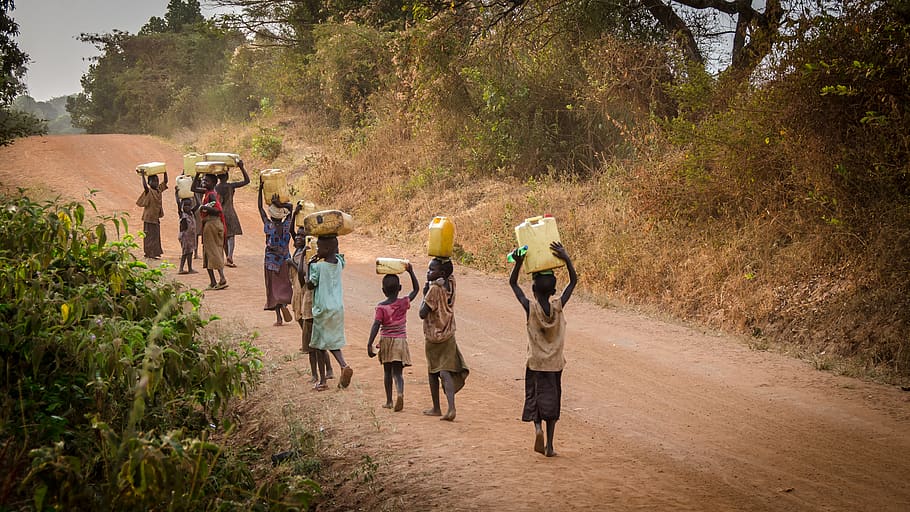
Women and girls remain at the centre of the global water crisis, spending 250 million hours every day collecting water, according to the latest United Nations World Water Development Report 2026, released by UNESCO on behalf of UN-Water.
The report, Water for All People: Equal Rights and Opportunities, warns that despite decades of policy commitments, gender inequality in water access and governance remains deeply entrenched, with serious consequences for health, education, and economic development.
A Crisis Measured in Time, Inequality and Risk
Globally, 2.1 billion people still lack safely managed drinking water, but the burden falls disproportionately on women and girls:
-
Women are responsible for water collection in over 70% of unserved rural households
-
Girls under 15 are nearly twice as likely as boys to fetch water
-
Women and girls collectively spend 250 million hours daily on water collection
This unpaid labour often comes at the cost of education, income opportunities, and personal safety.
"Ensuring women's participation in water management is key to sustainable development," said UNESCO Director-General Khaled El-Enany. "When women have equal access to water, everyone benefits."
Education, Health and Safety at Stake
The report highlights how inadequate water and sanitation services directly impact women's and girls' lives:
-
Poor sanitation contributes to school absenteeism and lost opportunities
-
Around 10 million adolescent girls missed school, work, or social activities between 2016–2022 due to lack of proper facilities
-
Unsafe water access exposes women and girls to health risks and gender-based violence
In many regions, simply collecting water can involve long distances, physical strain, and unsafe environments.
Women Key to Water Systems—Yet Excluded from Decision-Making
Despite their central role in managing water at household and community levels, women remain significantly underrepresented in leadership and governance:
-
Fewer than 20% of water sector workers are women in many low- and middle-income countries
-
Women hold less than half of government WASH roles in most countries
-
In nearly a quarter of countries, women occupy under 10% of such positions
"This is a systemic gap," the report notes, limiting effective and inclusive water management.
Structural Barriers: Land, Rights and Policy Gaps
The report identifies deep-rooted structural inequalities as key barriers:
-
Water access is often tied to land ownership, where women face discrimination
-
In some countries, men own twice as much land as women
-
Gender equality commitments often fail due to weak implementation and lack of integration into policies
These factors restrict women's ability to access water for productive uses such as agriculture, reinforcing cycles of poverty.
Climate Change Deepens Gender Inequality
Climate change is intensifying water scarcity and exposing existing inequalities:
-
A 1°C temperature rise reduces incomes in female-headed households by 34% more than in male-headed ones
-
Women's labour burden increases, with 55 extra minutes of work per week on average
In disaster-prone areas, women also face greater vulnerability due to limited access to early warning systems and recovery support.
A Call for Urgent Action
UN leaders stressed the need to fully recognize women's role in water solutions—not just as users, but as leaders, professionals, and decision-makers.
"It is time to manage water as a common good, with women and men working side by side," said Alvaro Lario, President of IFAD and Chair of UN-Water.
The report outlines key policy recommendations:
-
Remove legal and institutional barriers to women's rights to water and land
-
Increase gender-responsive financing and accountability
-
Invest in sex-disaggregated data to inform policy
-
Recognize and value unpaid water-related labour
-
Strengthen women's leadership and technical capacity
-
Move away from solutions that rely on unpaid female labour
Beyond Access: A Development Imperative
The findings position gender equality in water not just as a human rights issue, but as a critical driver of economic growth, resilience, and sustainability.
UNESCO and UN-Water emphasized that closing gender gaps in water access and governance could unlock significant social and economic benefits, from improved health outcomes to stronger community resilience.
A Global Call Ahead of World Water Day
Released ahead of World Water Day, the report serves as a call to governments, institutions, and partners to translate commitments into action.
With billions still lacking safe water and climate pressures intensifying, the report makes clear: achieving universal water access by 2030 will be impossible without addressing gender inequality at its core.








 Google News