



World Bank Approves $500M AGROW Project to Transform Nigeria’s Agriculture and Lift One Million Farmers
The AGROW project is expected to directly benefit up to one million smallholder farmers, with a strong focus on improving incomes, resilience, and market participation.
- Country:
- Nigeria
Nigeria is set for a major agricultural transformation after the World Bank approved a $500 million International Development Association (IDA) credit to boost productivity, strengthen value chains, and improve food security through the Sustainable Agricultural Value-Chains for Growth (AGROW) Project.
The six-year programme (2026–2032) aims to shift millions of smallholder farmers from subsistence farming to commercially viable agribusiness, while unlocking private investment and creating jobs across the sector.
Tackling Structural Challenges in Nigeria's Largest Employer
Agriculture remains Nigeria's largest source of employment, yet the sector continues to face deep-rooted challenges:
-
Low productivity among smallholder farmers
-
Limited access to quality seeds, fertilizers, and inputs
-
Weak market linkages and post-harvest losses
-
Increasing vulnerability to climate shocks
-
Persistent food and nutrition insecurity
As a result, millions of farmers remain trapped in low-income subsistence systems despite strong demand for food and agricultural products.
One Million Farmers to Benefit
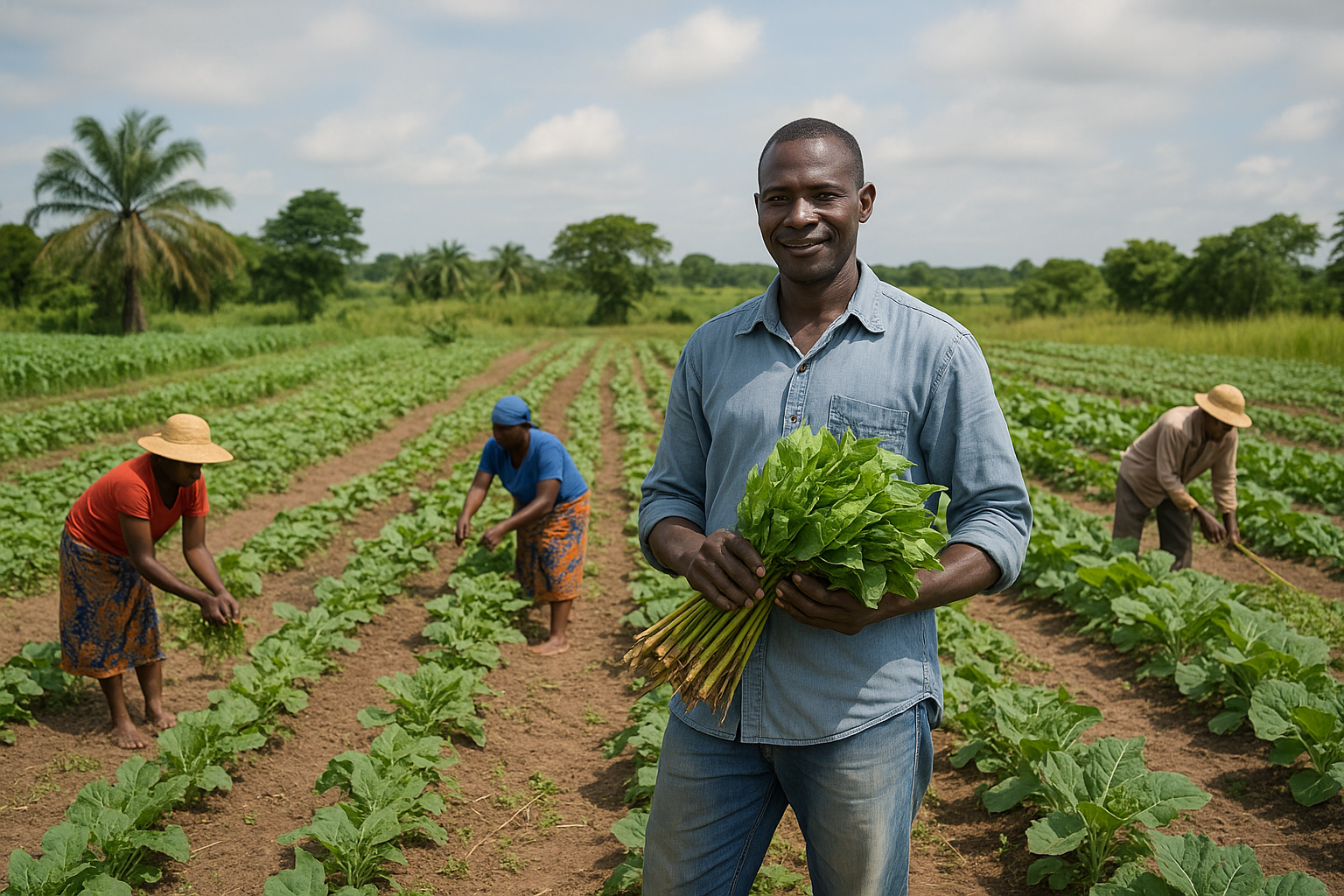
The AGROW project is expected to directly benefit up to one million smallholder farmers, with a strong focus on improving incomes, resilience, and market participation.
"This is a transformative step for Nigeria's agriculture," said Mathew Verghis, World Bank Country Director for Nigeria. "It will empower farmers, unlock private sector growth, and strengthen food security."
Private Sector at the Core: $220 Million Investment Expected
A key innovation of AGROW is its results-based matching grant facility, designed to attract agribusinesses that commit to sourcing from smallholder farmers.
The project is expected to mobilise $220 million in private sector investment, supporting activities such as:
-
Aggregation and structured sourcing from farmers
-
Improved post-harvest handling and storage
-
Value addition through agro-processing
-
Expansion of market access and supply chains
This approach aims to integrate smallholders into formal value chains, increasing their incomes and reducing inefficiencies.
Focus on High-Impact Crops
The programme will prioritise key staple crops critical to Nigeria's food system and economy:
-
Rice
-
Maize
-
Cassava
-
Soybeans
Improving productivity and value addition in these crops is expected to have a significant impact on food availability, prices, and rural livelihoods.
Digital Agriculture and Climate Resilience
AGROW places strong emphasis on technology and climate-smart agriculture, including:
-
Creation of a national digital farm and farmer registry
-
Deployment of digital advisory services, including localized weather and climate data
-
Expansion of access to climate-resilient seeds
These tools will help farmers make informed decisions, improve yields, and adapt to changing environmental conditions.
Strengthening Inputs and Regulatory Systems
The project will also address systemic issues in agricultural inputs by:
-
Improving seed and fertilizer regulatory frameworks
-
Expanding supply of early-generation seeds
-
Supporting private sector production of high-quality seeds
-
Enhancing farmers' access to quality fertilizers
This is expected to reduce inefficiencies and ensure that farmers have reliable access to inputs that boost productivity.
Promoting Inclusive Growth and Land Transparency
AGROW includes measures to ensure equity and accountability, with a focus on:
-
Women and youth participation in agriculture
-
Transparent and responsible land-based investments
-
Strong monitoring, coordination, and citizen engagement mechanisms
These elements are designed to make the agricultural transformation more inclusive and sustainable.
Part of a Broader Agriconnect Strategy
The project is a central component of the World Bank's Agriconnect initiative, which aims to transform smallholder farming systems into commercial, market-driven enterprises across developing economies.
For Nigeria, this aligns with national priorities to:
-
Increase agricultural productivity
-
Create jobs across value chains
-
Enhance food and nutrition security
-
Build resilience against climate and economic shocks
The $500 million AGROW project represents a major step toward unlocking Nigeria's agricultural potential. By combining private sector investment, digital innovation, and targeted support for smallholder farmers, the initiative aims to create a more productive, resilient, and inclusive food system—capable of feeding millions while driving economic growth.
ALSO READ
-
World Bank Backs $2 Billion Mega Rail Project to Transform Istanbul into Global Logistics Superhub
-
World Bank Approves $501M Digital Education Reform in El Salvador to Boost Learning and Jobs
-
World Bank Approves $100 Million to Boost MSME Financing and Job Creation in El Salvador
-
World Bank Loans Turkey $2 Billion for Landmark Rail Project
-
China, World Bank Launch New Collaboration Hub to Drive Global Ecological Solutions








 Google News