



From Awareness to Action: UN Pushes Global Glacier Protection Agenda into New Decade of Science and Resilience
Following landmark 2025 Glacier Year, world leaders and scientists call for urgent investment, monitoring, and cooperation as ice loss accelerates.
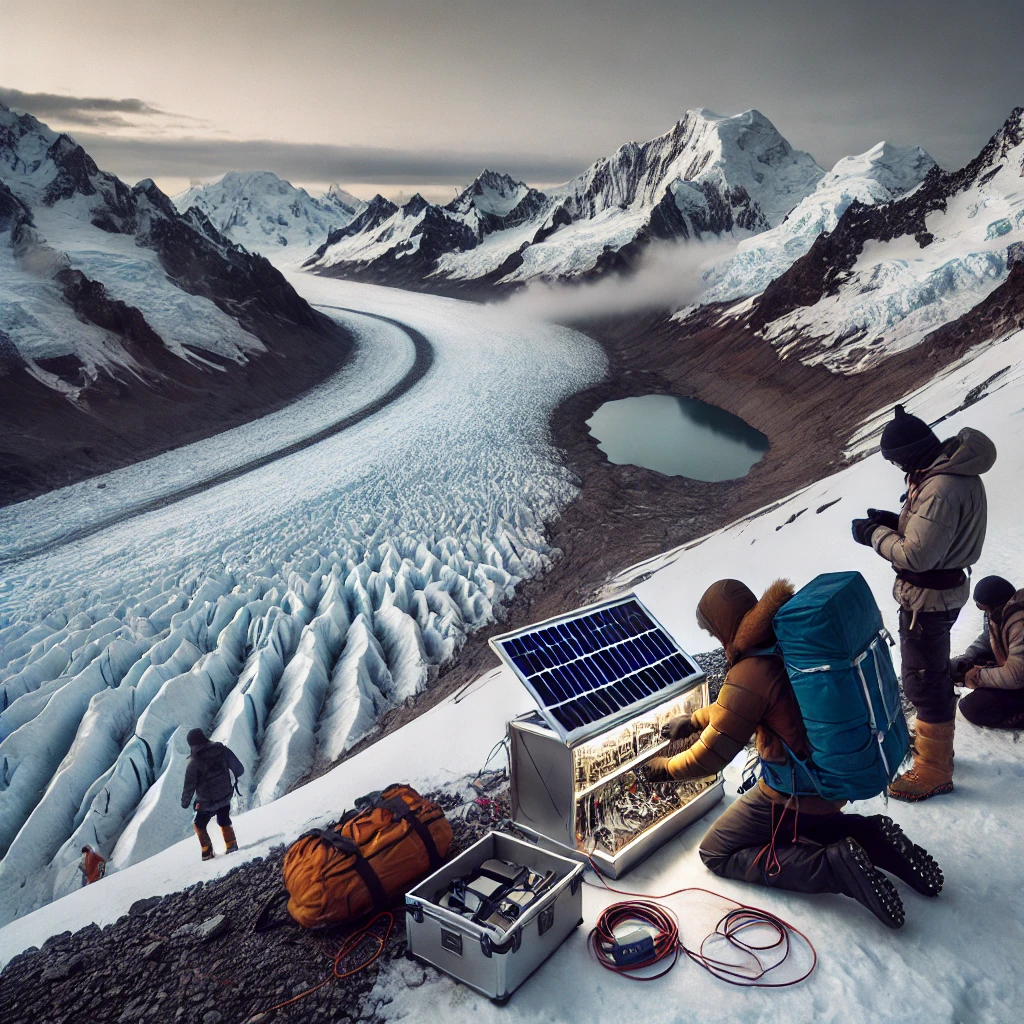
After placing glaciers firmly at the centre of the global climate agenda in 2025, international organisations are now urging governments to shift from awareness to coordinated, science-driven action to confront the accelerating loss of Earth's frozen water reserves.
The call comes as the International Year of Glaciers' Preservation (IYGP 2025) transitions into a long-term global effort—the Decade of Action for Cryospheric Sciences (2025–2034)—led by the World Meteorological Organization (WMO) and UNESCO.
A Rapidly Disappearing Freshwater Lifeline
The urgency is clear. The cryosphere—which includes glaciers, ice sheets, permafrost, sea ice, and snow—stores nearly 70% of the world's freshwater, making it critical to global water security.
However, scientific data shows alarming trends:
-
Glaciers are losing mass every year worldwide
-
Arctic sea ice has declined by around 40% since 1979
-
Greenland and Antarctic ice sheets are melting at accelerating rates
These changes are already driving sea-level rise, water shortages, ecosystem disruption, and increased disaster risks, affecting millions of people globally.
"Protecting glaciers is not only about ice—it is about water, safety, ecosystems, and the future of millions," said WMO Secretary-General Celeste Saulo.
A Global Turning Point: From Recognition to Response
The United Nations marked a historic step by declaring 2025 as the International Year of Glaciers' Preservation and designating 21 March as World Day for Glaciers, aligning it with broader climate and water agendas.
The initiative succeeded in:
-
Elevating glaciers as a global policy priority
-
Strengthening science–policy collaboration
-
Bringing together over 400 organizations, including Indigenous and local knowledge holders
-
Identifying major data and monitoring gaps
But leaders stress that awareness alone is no longer sufficient.
The Decade of Action: A Science-Led Roadmap
The newly launched Decade of Action for Cryospheric Sciences (2025–2034) aims to provide a structured, long-term framework to translate knowledge into policy and action.
The decade will focus on:
-
Strengthening global observation systems
-
Improving climate predictions and risk management
-
Enhancing adaptation strategies for vulnerable regions
-
Delivering actionable data for decision-makers
It will also serve as a bridge to the Fifth International Polar Year (2032–33), a major global scientific initiative focused on polar systems.
Four Pillars for Protecting the Cryosphere
Celeste Saulo outlined four key priorities that will shape global efforts in the coming decade:
1. Collaboration Across BordersGlaciers transcend national boundaries, sustaining agriculture, ecosystems, and economies across regions. Effective protection requires cross-border cooperation and shared responsibility.
2. Monitoring and Data ExpansionA major challenge lies in limited high-altitude data. Of the world's 15,000 surface monitoring stations, only about 1% are located above 3,000 metres, leaving critical knowledge gaps.
"Good decisions depend on good data," Saulo emphasized, calling for expanded monitoring infrastructure, capacity building, and data sharing.
3. Science-Driven Decision MakingFrom disaster risk reduction to water resource planning, science must guide policy. The WMO will prioritise strengthening cryosphere observations to support evidence-based decisions.
4. Investment and PartnershipsGovernments, international organisations, and the private sector must mobilise targeted and transparent investment to scale up monitoring systems and resilience measures.
Building a Global Cryosphere Data System
A cornerstone of the decade will be strengthening the Global Cryosphere Information System, led by WMO.
Key initiatives include:
-
Developing interoperable data standards
-
Promoting open data sharing across countries and institutions
-
Integrating non-traditional data sources, including Indigenous knowledge
-
Expanding coordinated global observation networks
The WMO's Global Cryosphere Watch (GCW) will prioritise building a comprehensive, accessible global data system, seen as essential for delivering climate and water services.
Preparing for Inevitable Change
While scientists acknowledge that glacier melt cannot be entirely stopped, they stress that its impacts can be managed through better preparation.
"We cannot stop glacier melt, and we cannot stop every hazard—but we can prepare for them through science-based monitoring, forecasting, and early warning systems," Saulo said.
A Global Imperative
As climate pressures intensify, the shrinking cryosphere is emerging as one of the most critical—and under-addressed—frontiers in climate action.
The transition from the Glacier Year to the Decade of Action signals a clear shift in global priorities: from raising awareness to delivering measurable outcomes.
If successful, the initiative could play a decisive role in safeguarding water resources, reducing disaster risks, and building resilience for communities worldwide.
ALSO READ
-
Hindu Kush Himalaya Glaciers: A Rapid Retreat
-
Uganda Parliament Signs MoU with PSFU and Climate Change Hub International
-
Heat Wave Havoc: Climate Change Redefines Weather Extremes in the U.S. Southwest
-
Sustainable Synergy: Uniting Tradition and Technology Against Climate Change
-
Vanishing Giants: The Retreat of Austria's Glaciers








 Google News