



From Power Outages to Nuclear Innovation: The Inspiring Journey of IAEA Engineer Dandara Araujo Da Silva
Growing up in São Gonçalo, on the outskirts of Rio de Janeiro, Dandara experienced firsthand the impact of unreliable electricity.
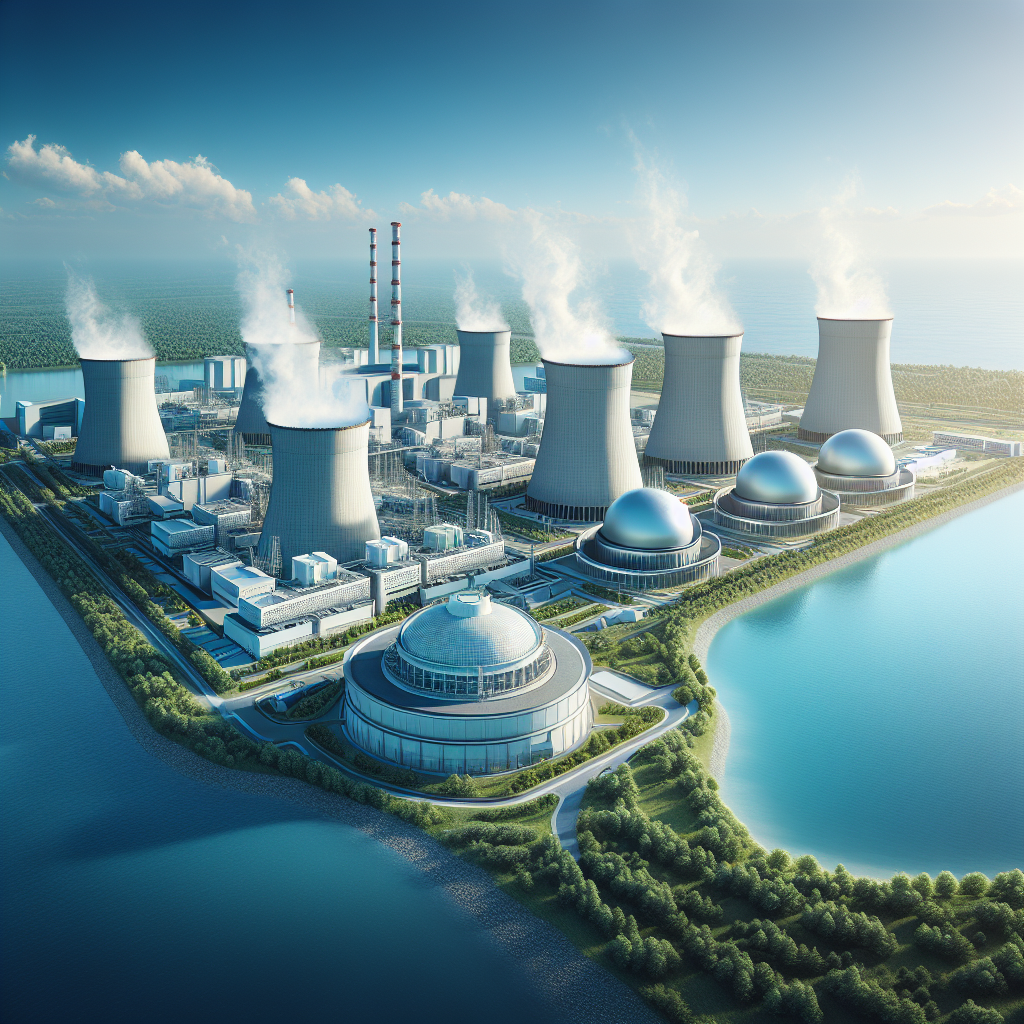
From a childhood marked by frequent blackouts in a small Brazilian town to working at the forefront of nuclear innovation on the global stage, Dandara Araujo Da Silva's journey reflects resilience, ambition, and a deep commitment to solving one of humanity's most pressing challenges—access to reliable energy.
Today, as an Associate Nuclear Engineer at the International Atomic Energy Agency (IAEA), Dandara contributes to cutting-edge work on small modular reactors (SMRs) and microreactors, helping shape the future of clean, stable, and scalable energy systems.
A Childhood Shaped by Energy Inequality
Growing up in São Gonçalo, on the outskirts of Rio de Janeiro, Dandara experienced firsthand the impact of unreliable electricity. Frequent power outages disrupted daily life and exposed the stark reality faced by many communities across the Global South.
"I have always seen energy as a human necessity," she says. "Many regions of the world still lack access to reliable electricity, including my hometown."
This early exposure ignited a lifelong mission—to be part of the solution to global energy inequality.
Dandara believes that while renewable sources like solar and wind are essential, they are not sufficient on their own to meet the world's growing and constant energy demands.
"The Global South is among the most affected regions, and relying solely on solar or wind is insufficient," she explains, pointing toward the need for reliable baseload power.
Choosing Nuclear for a Sustainable Future
Motivated by the search for resilient and low-carbon energy solutions, Dandara chose to pursue nuclear engineering—recognising its potential to deliver large-scale, continuous, and climate-friendly electricity.
"I saw the potential of nuclear energy to provide a resilient, large-scale, and low-carbon power source," she says.
Her work today focuses on reactivity control methods and advanced instrumentation systems for SMRs, technologies increasingly seen as key to expanding nuclear energy access, especially in regions with smaller grids or limited infrastructure.
Overcoming Barriers Through Determination
Dandara's path was far from easy. Coming from a modest background, she relied heavily on determination and family support to pursue her ambitions.
She enrolled in a technical high school in Niterói, where she immersed herself in learning—often spending hours in public libraries studying advanced subjects like calculus and physics well beyond her level.
Her dedication paid off when she secured admission to the prestigious Universidade Federal do Rio de Janeiro (UFRJ) to study nuclear engineering.
To sustain herself financially, she worked as a calculus teaching assistant, balancing academic demands with a daily commute of up to four hours.
Breaking Language and Cultural Barriers
In 2016, Dandara set her sights on studying in France—a global leader in nuclear energy with one of the highest shares of nuclear power in its electricity mix.
There was one major challenge: she did not speak French.
Undeterred, she taught herself the language in just a few months, meeting the requirements to enrol in a master's programme in mechanical systems engineering at the Institut National des Sciences Appliquées (INSA) Toulouse.
This experience proved transformative. Systems engineering gave her a holistic understanding of complex technologies, including how nuclear systems are designed, deployed, and commercialised.
"I was fascinated by how nuclear engineering blends multiple disciplines—physics, chemistry, geology, mathematics, biology, and even sociology," she says.
From Industry to Global Impact
During her studies in France, Dandara secured a role at Framatome, a leading nuclear reactor company with decades of global experience.
Her time in industry provided hands-on exposure to reactor technologies and reinforced her expertise, paving the way for her transition to the IAEA, where she now contributes to international nuclear energy development and cooperation.
Her work includes participation in global forums such as the IAEA's International Conference on Stakeholder Engagement for Nuclear Power Programmes, highlighting the importance of public trust and collaboration in expanding nuclear energy.
Recognition and Advocacy for Women in Nuclear
Dandara's achievements have also been recognised internationally. She received the Junior Working Women for the Fem'Energia Award, an initiative promoting women's careers in the nuclear sector across Europe.
Her journey stands as a powerful example of breaking gender and socio-economic barriers in a traditionally male-dominated field.
Redefining Possibilities
When reflecting on her greatest achievement, Dandara does not point to awards or career milestones—but to the courage it took to reimagine her future.
"Finding the courage to redefine my life entirely," she says. "To imagine a future that once felt unattainable—and work every day to make it real."
She credits the strength of the women in her family—her mother and grandmothers—for shaping her resilience.
"They refused to accept the limited place society assigned them," she says.
Despite moments of doubt, loneliness, and self-questioning, Dandara persevered—driven by purpose and belief.
"If I listened to those doubts, I wouldn't be here."
A Role Model for the Next Generation
Dandara Araujo Da Silva's story is more than a personal success—it reflects the broader potential of inclusive, innovative energy solutions driven by diverse voices and experiences.
As the world grapples with rising energy demand, climate change, and inequality in access, professionals like Dandara are helping redefine what's possible—bringing science, determination, and vision together to power a more equitable future.
ALSO READ
-
How Nuclear Science Is Cutting Global Food Waste: Five Innovative Solutions Backed by FAO and IAEA
-
Singapore’s National Radiochemistry Laboratory Designated as IAEA Collaborating Centre
-
Projectile Incident at Bushehr: IAEA Urges Caution
-
Blykalla's Bold Move: A New Era of Nuclear Energy in Sweden
-
Lao PDR and IAEA Partner to Expand Peaceful Nuclear Technology for Development








 Google News