



Bulgaria University Named IAEA Hub to Train Next-Gen Nuclear Security Experts
From a global security and technology perspective, the Collaborating Centre will help address critical skills shortages as nuclear technologies evolve and diversify.
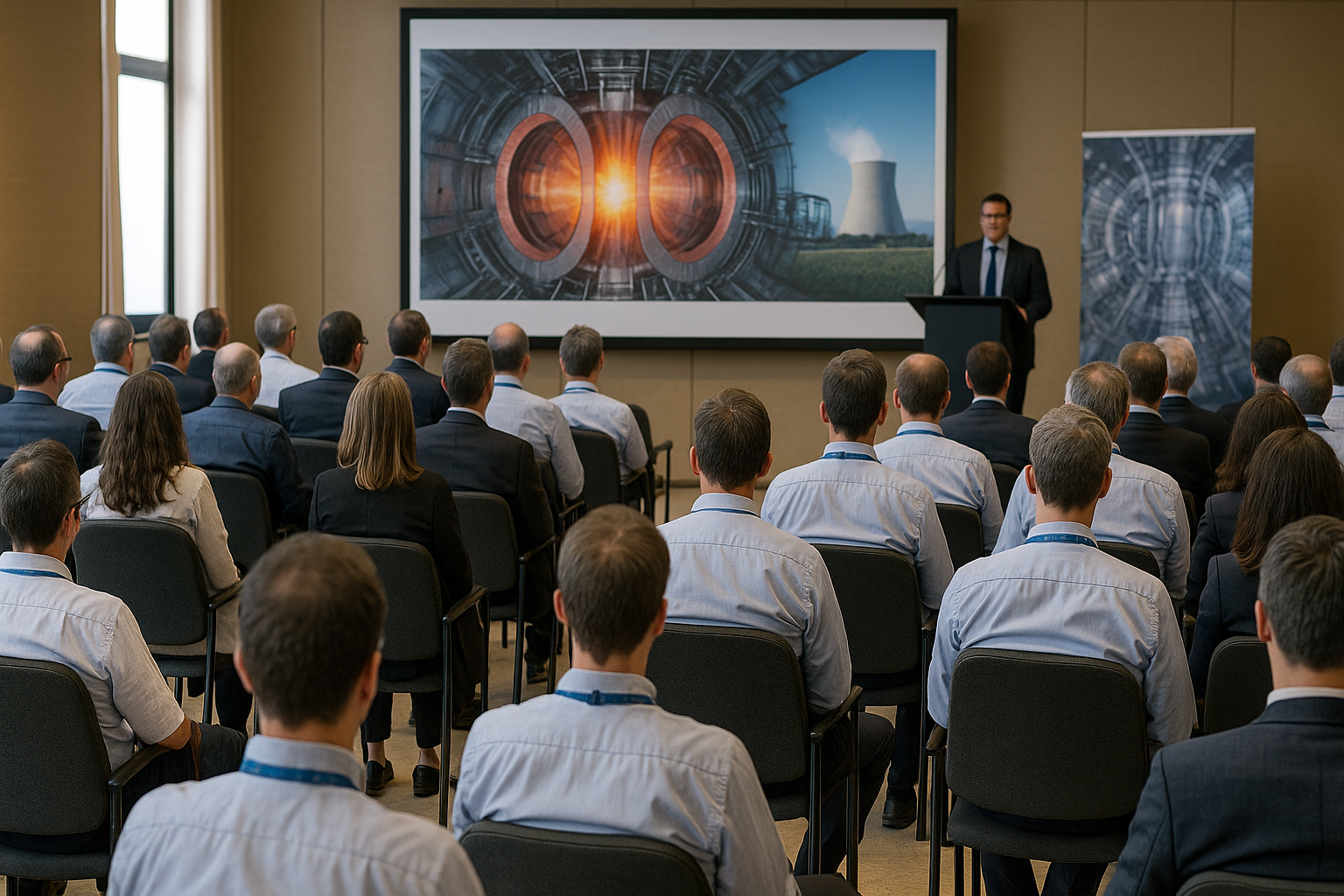
Global efforts to strengthen nuclear security capacity have received a boost, with Bulgaria's University of National and World Economy (UNWE) officially designated as an IAEA Collaborating Centre for capacity building in nuclear security.
The designation formalises and elevates a long-standing partnership between UNWE and the International Atomic Energy Agency (IAEA), positioning the university as a strategic global training and knowledge hub at a time of growing focus on nuclear security, emerging technologies, and workforce development.
"The designation of Bulgaria's University of National and World Economy as an IAEA Collaborating Centre builds on a long-standing cooperation and makes it a strategic partner for the IAEA," said Karine Herviou, IAEA Deputy Director General and Head of the Department of Nuclear Safety and Security. "This agreement brings together expertise, resources and support to strengthen nuclear security education and training globally."
Under the four-year agreement, UNWE will:
-
Continue delivering its international master's programme in nuclear security
-
Operate as a Nuclear Security Support Centre
-
Host international meetings, training courses and workshops on:
-
Small modular reactors (SMRs)
-
Nuclear forensics
-
Radiological crime scene management
-
Emerging nuclear security challenges
-
From a global security and technology perspective, the Collaborating Centre will help address critical skills shortages as nuclear technologies evolve and diversify.
"This partnership strengthens Bulgaria's role in international nuclear security efforts and supports the development of highly qualified specialists in the region," said Dimitar Dimitrov, Rector of UNWE. "As a Collaborating Centre, UNWE will advance education, applied research and institutional cooperation aligned with global standards."
The designation builds on a decade of proven delivery. In 2024, UNWE marked the 10th anniversary of its international nuclear security master's programme. Since 2015, the university has trained more than 80 specialists from 15 countries, working closely with the IAEA to deliver applied, globally relevant education.
As an IAEA Collaborating Centre, UNWE plans to:
-
Host annual meetings of the International Network for Nuclear Security Training and Support Centres
-
Convene the International Nuclear Security Education Network
-
Deliver an international workshop focused on human resource development and programme planning in nuclear security
About IAEA Collaborating Centres for Nuclear Security
IAEA Collaborating Centres are institutions that support the Agency's work by providing technical expertise, education, training, and applied research. Operating at national, regional and international levels, they play a central role in strengthening global nuclear security capacity.
With UNWE's designation, the total number of active IAEA Collaborating Centres for nuclear security now stands at 15. In 2025 alone, new centres were also designated in Canada and France, alongside extension agreements with centres in China, Japan and Morocco.
Call to action: investing in skills for a complex nuclear future
As nuclear technologies expand—particularly in areas such as SMRs, forensic science and security response—the demand for highly trained professionals is accelerating. The IAEA–UNWE partnership highlights how international collaboration, education and applied research are essential to keeping global nuclear systems safe, secure and resilient.
ALSO READ
-
New IAEA Publications to Shape Nuclear Policy, Safety and Health in 2026
-
India–EU Deepen Defence Ties, Eye Joint Role in Global Security
-
Iran Calls for IAEA Stance on Nuclear Site Attacks
-
Germany and France: Strengthening Europe's Nuclear Security
-
IAEA Deploys Advanced Nuclear Security Capabilities to Protect AFCON 2025 in Morocco








 Google News