



Kenyan Women with Disabilities Lead Push for Inclusive Employment and Systems
In response, Kenya is strengthening efforts to integrate disability inclusion into national development frameworks—with persons with disabilities actively shaping these policies.
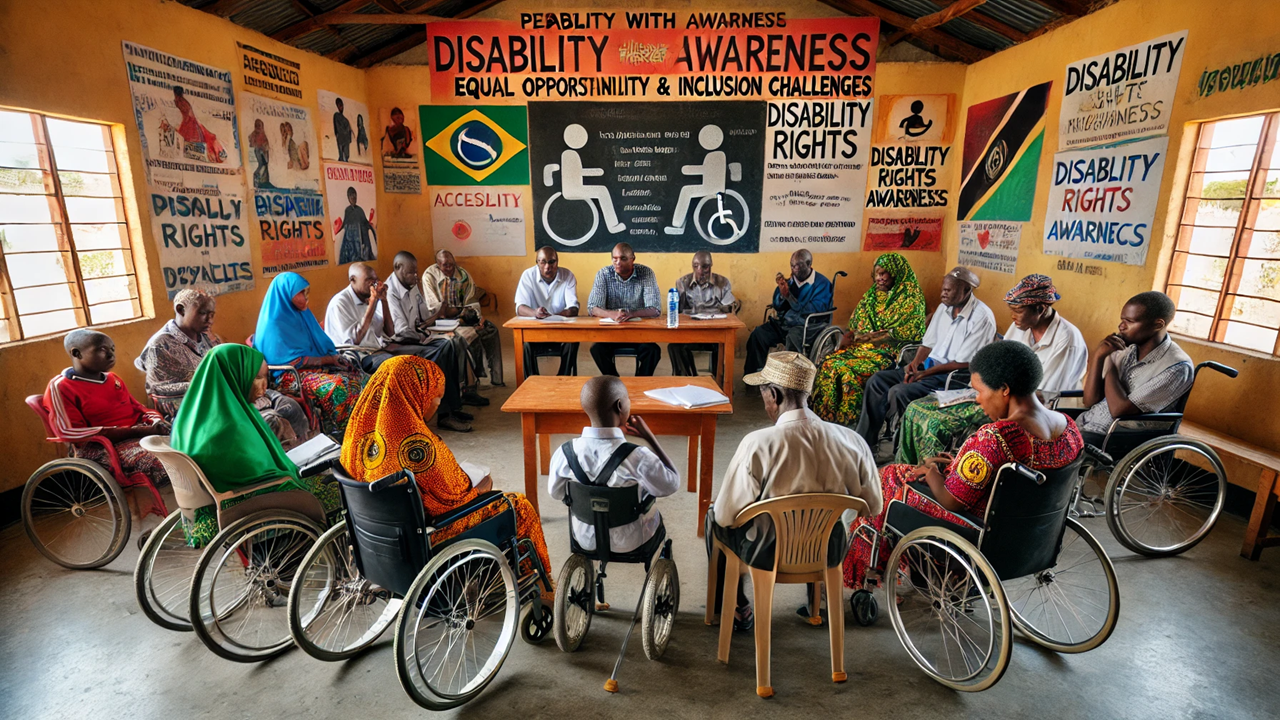
Kenya is witnessing a growing shift toward disability-inclusive development, as persons with disabilities take on a more central role in shaping national policies, employment systems, and social inclusion strategies. At the heart of this transformation is a powerful principle: those most affected by barriers must be directly involved in designing solutions.
One of the voices driving this change is Benter Bella Mboya, a public servant from Kisumu County whose journey reflects both the systemic challenges faced by persons with disabilities and the growing momentum for reform.
From Barriers to Leadership
Benter's story is emblematic of resilience in the face of structural inequality. Growing up as the only student with a disability in her class, she actively participated in school life, navigating barriers with determination.
Her pursuit of higher education and professional opportunities, however, exposed deeper systemic gaps. Daily commutes using public transport, long distances across university campuses, and inaccessible infrastructure highlighted the lack of inclusive planning in public systems.
After completing her studies, Benter faced years of job rejections—a reality experienced by many persons with disabilities globally. According to international labour estimates, employment rates for persons with disabilities can be up to 50% lower than those without disabilities, often due to discrimination, inaccessible workplaces, and limited policy implementation.
During this period, she launched a small business to sustain herself—demonstrating the entrepreneurial resilience often seen among marginalized groups.
Her breakthrough came in 2020, when she was selected as a Village Administrator in Kisumu County, standing out among more than 1,600 applicants—a highly competitive process with limited representation of women and persons with disabilities.
Persistent Structural Challenges
Even after securing employment, barriers remained. Benter recalls navigating multiple inaccessible floors in a government building while submitting onboarding documents—an experience that underscores the everyday challenges faced by persons with disabilities in accessing public services and workplaces.
"People often ask why we need inclusive spaces," she says. "My answer is simple: so we can do our jobs with dignity."
Across Kenya, similar challenges persist:
-
Limited accessible infrastructure in public and private institutions
-
Gaps in inclusive transport systems
-
Uneven enforcement of employment quotas
-
Persistent stigma and discrimination in hiring practices
A National Shift Toward Inclusive Policy Design
In response, Kenya is strengthening efforts to integrate disability inclusion into national development frameworks—with persons with disabilities actively shaping these policies.
Benter is now a member of the Kenyan Network of Women and Girls with Disabilities, contributing her lived experience to advocacy and policy dialogue at both local and national levels.
Her work is also aligned with initiatives led by the International Labour Organization (ILO), which—supported by the Global Disability Fund—is collaborating with partners to enhance disability-inclusive systems in Kenya.
UN-Led Programme Driving Systemic Change
A major driver of this progress is a United Nations joint programme implemented by the ILO, UNICEF, and UNFPA, in coordination with the Office of the UN Resident Coordinator.
The programme brings together key stakeholders, including:
-
The Ministry of Labour and Social Protection
-
The National Council for Persons with Disabilities
-
Organizations of persons with disabilities
-
The Federation of Kenya Employers
-
The Central Organization of Trade Unions
Crucially, persons with disabilities are not just beneficiaries—but active contributors in designing solutions.
Practical Tools for Real Impact
The initiative has already delivered a set of actionable frameworks aimed at closing inclusion gaps:
-
Guidelines for meaningful participation of persons with disabilities in policymaking
-
A training module on disability rights for public and private sector actors
-
Implementation guidance for Kenya's 5% employment quota for persons with disabilities
-
A national strategy to combat stigma and discrimination
These tools are designed to move beyond policy commitments and ensure real-world implementation, addressing long-standing gaps in access and opportunity.
Inclusion as a Driver of Economic Growth
Experts note that improving disability inclusion is not only a human rights imperative but also an economic opportunity. The World Bank estimates that excluding persons with disabilities from the workforce can cost countries up to 7% of GDP due to lost productivity and reduced economic participation.
By contrast, inclusive policies can:
-
Expand the labour force
-
Increase innovation through diverse perspectives
-
Strengthen social cohesion and equity
"Nothing About Us Without Us"
For Benter and many others, the path forward is clear: inclusion must be built on participation.
"Employ persons with disabilities. Include us in decision-making. We know what works because we live it," she emphasizes.
A Model for Inclusive Development
As Kenya advances its disability inclusion agenda, the growing involvement of persons with disabilities in policy design represents a critical shift—from top-down approaches to co-created, experience-driven solutions.
This model not only ensures that policies are more effective and relevant but also sets a precedent for other countries seeking to build inclusive, equitable, and resilient societies.








 Google News