



UN Expert Urges North Korea to Take Concrete Action on Human Rights, Calls for Global Cooperation
“The DPRK has engaged with some international human rights mechanisms and expressed its commitment to a number of human rights obligations,” Salmón said.
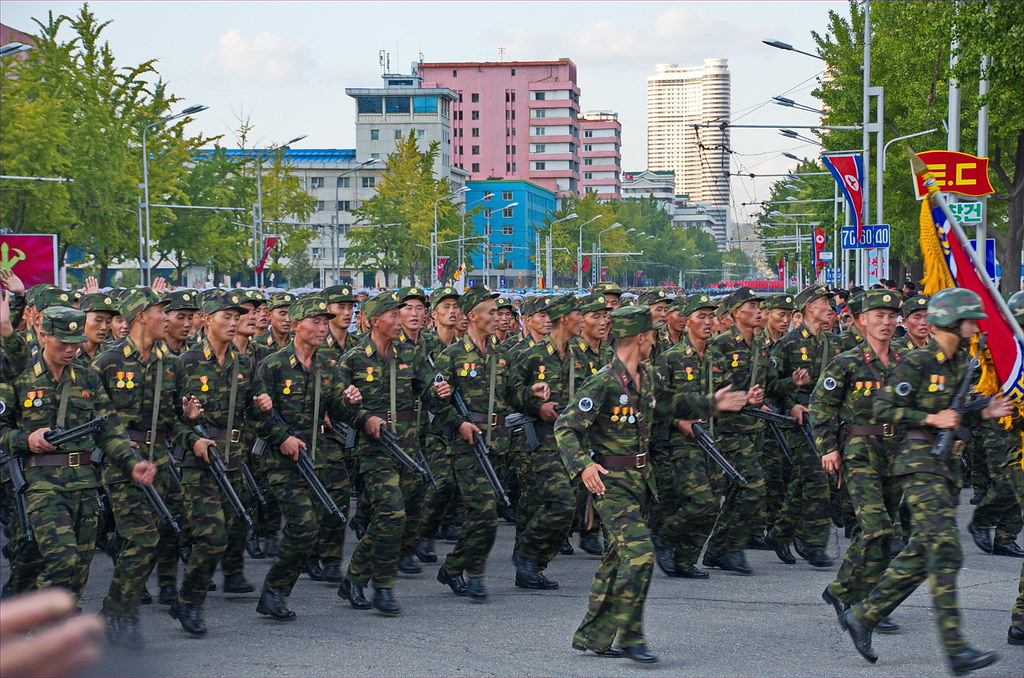
The United Nations Special Rapporteur on human rights in the Democratic People's Republic of Korea (DPRK) has called for urgent, measurable reforms and stronger international cooperation, warning that the country's human rights situation has shown no overall improvement in the past decade.
Presenting her latest report to the UN Human Rights Council, Special Rapporteur Elizabeth Salmón acknowledged limited engagement by North Korea with international mechanisms but stressed that commitments have yet to translate into real progress.
"The DPRK has engaged with some international human rights mechanisms and expressed its commitment to a number of human rights obligations," Salmón said.
"However, there has been no overall improvement in the human rights situation in the last decade."
Call for Action on Economic and Social Rights
Salmón urged North Korea to take concrete steps, particularly in advancing economic, social and cultural rights, including access to healthcare, food, and basic services.
As a signatory to the International Covenant on Economic, Social and Cultural Rights (ICESCR), North Korea is obligated to progressively realise these rights using available resources and international cooperation.
"The State has the obligation to take steps, individually and through international assistance and cooperation, to achieve the full realisation of those rights," Salmón said.
She emphasised that policy commitments must be backed by implementation plans, measurable targets and accountability mechanisms.
Lack of Data Raises Accountability Concerns
A key issue highlighted in the report is the absence of updated official data, which undermines efforts to track progress and ensure accountability.
Although North Korea supported recommendations during the Universal Periodic Review (UPR) cycles in 2019 and 2024 to reduce infant and maternal mortality, it has not released official data since 2017.
UN estimates suggest limited progress:
-
Infant mortality rate:
-
2019: 14.299 per 1,000 live births
-
2023: 14.536 per 1,000 live births
-
-
Maternal mortality ratio:
-
2020: 66 per 100,000 live births
-
2023: 67 per 100,000 live births
-
The figures indicate no meaningful improvement, and in some cases slight deterioration.
"These measurable recommendations underline the necessity for the State to first generate current data as a baseline, then identify targets and a roadmap," Salmón said.
UN Proposes Benchmarks and Monitoring Framework
To bridge the gap between commitments and outcomes, the Special Rapporteur has proposed a framework of human rights indicators and measurable benchmarks.
The approach would enable the DPRK to:
-
Establish baseline data
-
Define clear targets and timelines
-
Monitor implementation of UPR recommendations
-
Report progress transparently
Salmón encouraged authorities to adopt these tools to improve transparency and demonstrate progress to the international community.
International Cooperation Essential
The report underscores that international cooperation is critical to improving human rights outcomes in North Korea.
Salmón said the United Nations can support reforms through technical assistance, capacity-building and policy guidance, provided there is engagement with the government.
She also called on other countries to actively support implementation efforts through diplomatic engagement and knowledge sharing.
"I recommend that other States take any opportunity to follow up on the UPR recommendations, including through sharing technical support and lessons learned," she said.
A Shared Responsibility
The Special Rapporteur concluded that improving human rights in North Korea will require both domestic political will and sustained international support.
She stressed that cooperation is not optional, but a legal and moral obligation under international human rights frameworks.
"International cooperation is a human rights obligation," Salmón said.
The report signals growing international pressure on the DPRK to move beyond commitments and deliver tangible improvements in the living conditions and rights of its population.
ALSO READ
-
North Korea's Assembly Poised for Transformation: Leadership and Legacy at Stake
-
Bridging Skies: China-North Korea Flights to Resume
-
North Korea's Electoral Show: A Facade of Democracy
-
North Korea’s Supreme People's Assembly Election: A Show of Unity or Control?
-
World Affairs Unfold: Ukraine, Israel, North Korea, and Global Politics








 Google News