



Lebanon Displacement Crisis Deepens as Airstrikes Force Citizens to Flee
The Bir Hassan School compound is one of over 600 government-designated shelters across Lebanon, currently housing more than 128,000 displaced people.
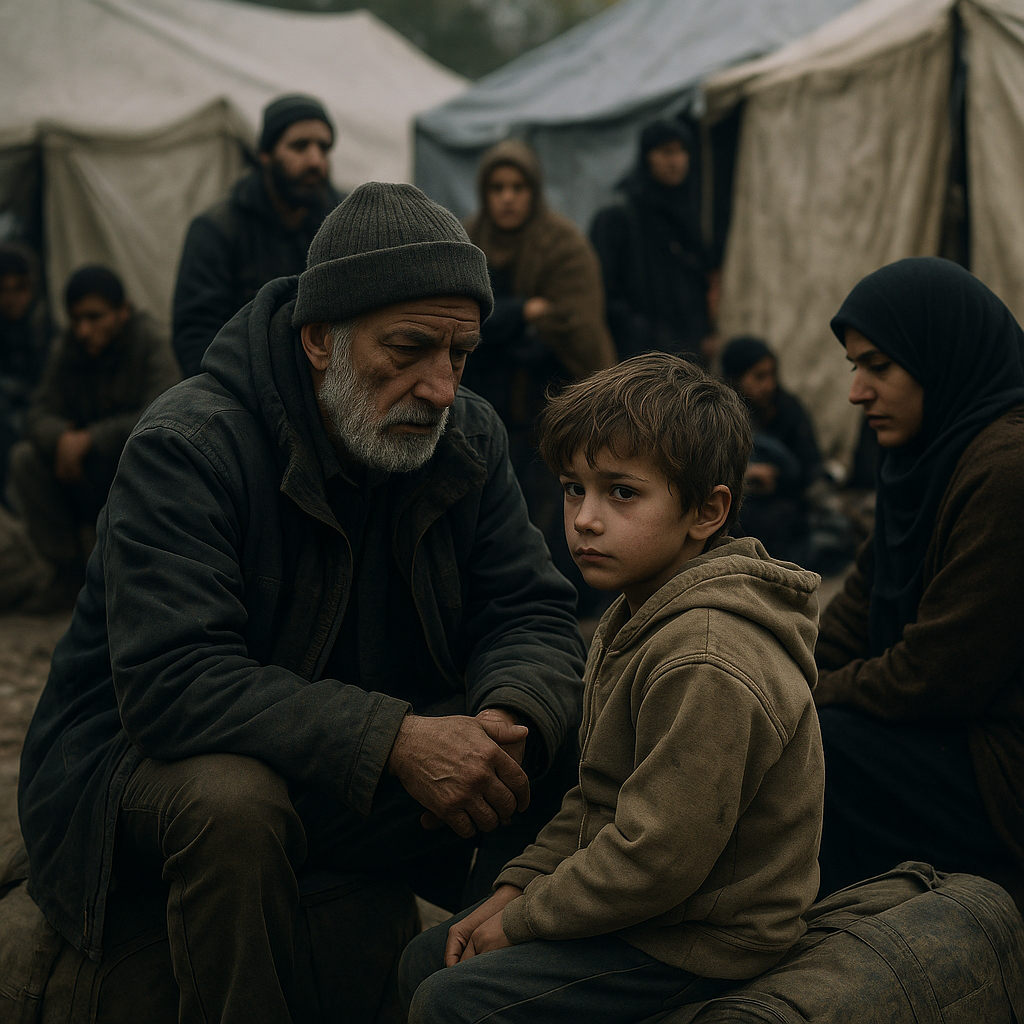
The sound of children's voices fills the corridors of Bir Hassan School near Beirut's beachfront, but the classrooms are no longer places of learning. Instead, they have become emergency shelters for families forced to flee their homes as Israeli airstrikes intensify across Lebanon.
Schools across the country have been transformed into collective shelters as the conflict escalates. Classrooms that hosted lessons only days ago are now crowded with families who escaped bombardments in Beirut's southern suburbs, southern Lebanon, and parts of the Bekaa Valley.
Displacement Surges Across Lebanon
According to government figures, more than 822,000 people had registered as displaced by 12 March, though the real number is believed to be higher as many families remain unregistered or are staying with relatives.
The Bir Hassan School compound is one of over 600 government-designated shelters across Lebanon, currently housing more than 128,000 displaced people.
Families arriving at the shelters often carry only a few belongings gathered during their hurried escape—children's toys, schoolbooks, clothes, and even small cages with pet birds.
Across the country, nearly 90 percent of these collective shelters are already at full capacity, forcing many displaced families to sleep in cars, public spaces, or overcrowded homes of relatives.
Life Interrupted by War
Among those now living in the Bir Hassan shelter is Fadi Merhi, 58, who returned to Lebanon after spending most of his life in Germany.
Not long after coming home, he lost his leg when he was injured in a drone strike targeting a car in Tebnine in southern Lebanon.
When the bombardments intensified in early March, he fled to the school shelter, which now hosts more than 2,500 displaced people.
Despite his own hardship, Fadi spends his days trying to lift the spirits of others in the shelter.
"Many people here feel overwhelmed," he said. "If I can make someone smile, even for a moment, it helps all of us."
He had hoped to spend his retirement peacefully with family after selling his belongings in Germany and returning to Lebanon.
"I sold everything in Germany, cashed in my pension and came back to Lebanon to spend my retirement among my family and friends here," he said. "Only to get caught in this madness."
Holding on to Small Moments of Normalcy
Inside another classroom, Abir, a 52-year-old grandmother, prepares food for her relatives by carefully stuffing vine leaves with rice.
She fled Beirut's southern suburbs with her extended family a week earlier.
"I left with nothing," she said. "My son managed to go back to our apartment in Dahyeh today to bring what we had left in the fridge."
Cooking meals for her family in the classroom offers her a brief sense of normal life.
"Cooking for my family here helps me feel, even for a moment, like I am still at home."
The displacement comes during the holy month of Ramadan, adding further strain for families trying to observe religious traditions while living in emergency shelters.
Shelters Overcrowded Across Beirut
At Rafic Hariri High School in Beirut's Zokak el-Blat neighbourhood, another shelter hosts around 1,600 displaced people.
Families sleep side-by-side in classrooms, while tents fill the school playground.
Throughout the day, the school bell continues to ring automatically, marking class periods that no students attend—a constant reminder of disrupted lives.
Among the displaced residents is Yahya Assaf, 59, who fled after an airstrike struck near his neighborhood.
He now shares a small tent with his wife, sons, and three grandchildren.
"When they hear explosions, I tell them it is fireworks for a wedding," he said. "I try to protect them from the fear and ugliness we are experiencing."
Humanitarian Response Under Pressure
The UN Refugee Agency (UNHCR) is supporting the Lebanese government and humanitarian partners in responding to the growing crisis.
Since the escalation began, UNHCR has assisted more than 66,000 displaced people across over 300 shelters.
Aid provided includes:
• 178,000 emergency relief items• Mattresses and blankets• Solar lamps• Water containers and other essential supplies
However, humanitarian agencies warn that needs are rising rapidly as displacement continues.
UNHCR's operations in Lebanon are currently only 14 percent funded, leaving limited capacity to expand assistance as shelters fill up and aid supplies run low.
Families Displaced Multiple Times
The conflict has also displaced families who had already been forced to flee in previous violence.
In Tripoli, Lebanon's second-largest city in the north, shelters host families who escaped earlier bombardments.
Among them is Saddam Smadi, his wife Hajar, and their three children, who previously fled attacks in 2024.
The family was living in Kfar Sir in Nabatiyeh before the recent escalation forced them to flee again.
Their journey north—normally a two-hour trip—took two days because roads were overcrowded and transport was limited.
During the journey, the family became separated.
Their 17-year-old son Mohammad was left behind for hours without a phone or a way to charge it before eventually reuniting with his family at the shelter.
Mohammad, who works installing solar lighting, said the hardest part now is the uncertainty.
"All I wish for now is for my family to stay safe."
Urgent Need for International Support
As displacement continues to rise and shelters approach capacity, humanitarian agencies warn that greater international support is urgently needed.
Aid organizations stress the need to:
• Ensure civilian protection
• Maintain humanitarian access to affected areas
• Provide emergency assistance to displaced families
Without increased funding and support, humanitarian actors warn that Lebanon's already strained response capacity could quickly become overwhelmed.
For families sheltering in schools and public buildings across the country, the hope remains simple—safety, stability, and the chance to return home.








 Google News