



SA Pushes ‘Unapologetic’ Drive for Gender Parity in Judiciary Amid Challenges
The gathering brought together leading women jurists from across the continent to strengthen collaboration, share expertise, and advance constitutional justice and gender equality in African legal systems.
- Country:
- South Africa
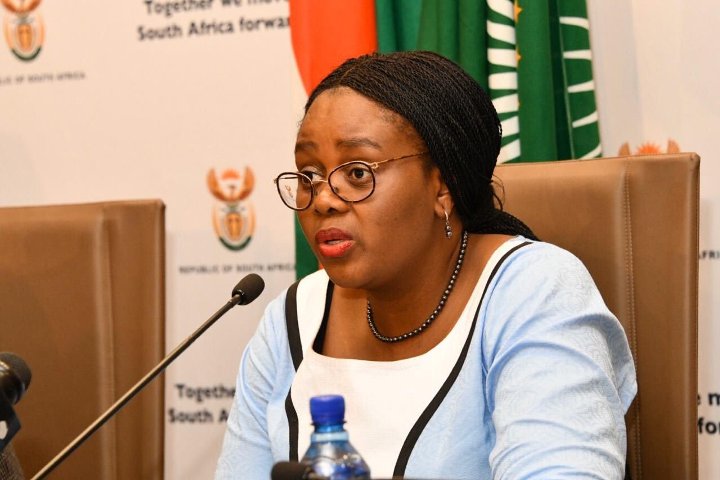
South Africa is intensifying efforts to achieve gender parity within its judiciary, with Justice and Constitutional Development Minister Mmamoloko Kubayi declaring that transformation of the bench will be pursued "vigorously and unapologetically" as part of a broader push for equality and justice reform.
Addressing the Second High-Level Meeting of Women Judicial Leaders of Africa in Johannesburg, held alongside the Conference of Constitutional Jurisdictions of Africa (CCJA), Kubayi underscored the country's evolving judicial landscape while acknowledging that structural inequalities remain deeply entrenched.
The gathering brought together leading women jurists from across the continent to strengthen collaboration, share expertise, and advance constitutional justice and gender equality in African legal systems.
From Exclusion to Near Parity
Kubayi highlighted the dramatic transformation of South Africa's judiciary since the advent of democracy in 1994, when representation was overwhelmingly skewed.
At the time, the judiciary comprised 165 judges—160 white men, three black men, and only two white women, with no black woman judge in the country.
Today, the composition reflects a far more inclusive system:
-
Approximately 255 judges serve in Superior Courts
-
131 are men and 124 are women, approaching gender parity
"This progress is significant, but it is not enough," Kubayi said, stressing that continued effort is required to fully realise gender equality on the bench.
Notably, women now hold leadership positions across the judiciary:
-
Six of the country's 15 Superior Courts are led by women
-
The Constitutional Court, headed by Chief Justice Mandisa Maya, has a majority of women judges
-
The Supreme Court of Appeal also reflects strong female representation
At the magistracy level, transformation has advanced even further, with 898 of 1,626 magistrates (55%) being women, marking a milestone in gender representation within the lower courts.
Women Judges Driving Transformative Jurisprudence
Kubayi emphasised that increased representation is not merely symbolic but has substantive implications for justice delivery. Women in the judiciary are playing a critical role in shaping legal frameworks on:
-
Gender equality
-
Reproductive rights
-
Protection of vulnerable groups
Their presence, she noted, aligns with South Africa's constitutional vision of equality, dignity, and human rights.
Persistent Barriers: Implementation Gaps and GBVF
Despite legislative progress, Kubayi cautioned that policy alone does not guarantee meaningful change. She identified slow implementation and the ongoing crisis of gender-based violence and femicide (GBVF) as major obstacles.
"In the past 30 years, we have learnt that codification does not always translate into implementation," she said, pointing to a disconnect between progressive laws and real-world outcomes.
South Africa continues to grapple with high levels of violence and discrimination against women, undermining both social stability and the rule of law.
In response, government has elevated GBVF to a national priority, with President Cyril Ramaphosa declaring it a national disaster, prompting a coordinated, multi-sectoral response.
Strengthening Legal and Institutional Responses
Kubayi outlined a series of interventions aimed at strengthening gender-focused jurisprudence and improving access to justice for victims of GBVF, including:
-
Expansion of Specialised Sexual Offences Courts and Thuthuzela Care Centres
-
Legislative reforms to enhance legal protections
-
Introduction of online applications for domestic violence protection orders, including service via platforms such as WhatsApp
-
Enhanced training for judicial officers and prosecutors on gender sensitivity
-
Development of a Femicide Watch system to track data and trends
-
Community engagement to ensure cultural practices align with constitutional values
These measures form part of the National Strategic Plan on GBVF, aimed at prevention, protection, accountability, and victim support.
A Legacy of Resistance, A Future of Equality
Drawing historical parallels, Kubayi reminded delegates that the pursuit of gender justice is rooted in South Africa's liberation history, referencing the 1956 Women's March, where 20,000 women protested against apartheid pass laws.
Invoking the iconic slogan "Wathint' Abafazi, Wathint' Imbokodo" ("You strike a woman, you strike a rock"), she called on modern judicial leaders to carry forward that legacy of resistance and transformation.
"Your lived experiences reshape how law is interpreted, how justice is delivered, and how society evolves," Kubayi told delegates, urging them to use their positions to build courts that are more humane, inclusive, and responsive.
Toward a More Inclusive Justice System
As South Africa continues its transformation journey, the push for gender parity in the judiciary is increasingly seen as central to strengthening democracy, enhancing public trust, and ensuring that the legal system reflects the society it serves.
Kubayi concluded with a call for sustained collective action: to move beyond dialogue toward measurable change, and to build a justice system where equality is not aspirational—but fully realised.








 Google News