



Mashatile Pushes for Deeper SA–China Economic Ties as Trade Hits $36.4 Billion
China remains South Africa’s largest trading partner, with bilateral trade rising by 6.4% from US$34.2 billion in 2024 to US$36.4 billion in 2025.
- Country:
- South Africa
Deputy President Paul Mashatile has urged a significant expansion of economic cooperation between South Africa and China, calling for increased investment in high-impact sectors to accelerate industrialisation, create jobs, and drive sustainable, long-term growth.
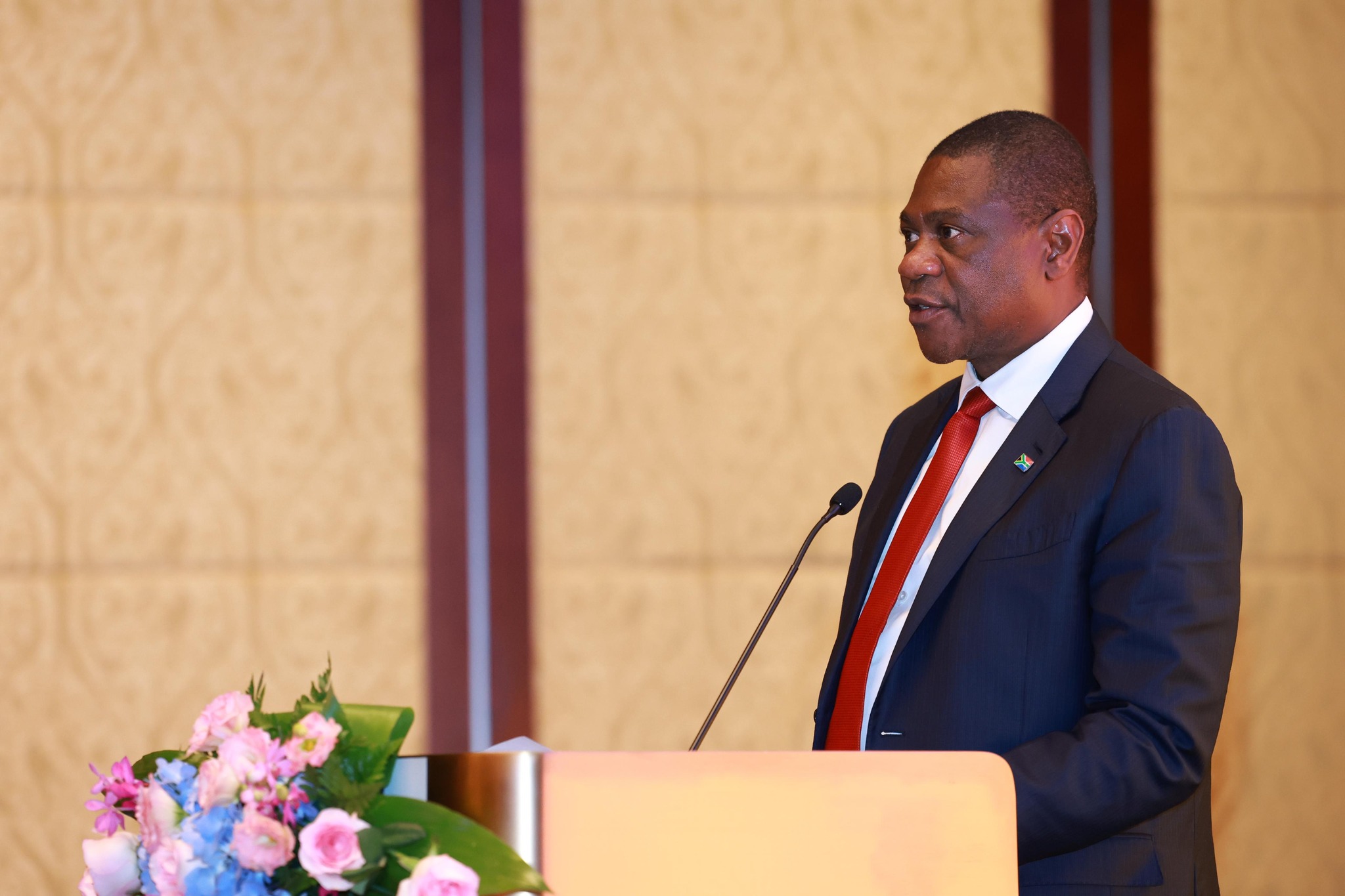
Addressing business leaders and policymakers at the South Africa–China Economic and Trade Forum held at the Mount Nelson Hotel on Friday, Mashatile positioned the bilateral partnership as a critical lever for South Africa's economic transformation—while emphasising the need to move beyond traditional trade patterns.
Trade Growth Masks Structural Imbalance
China remains South Africa's largest trading partner, with bilateral trade rising by 6.4% from US$34.2 billion in 2024 to US$36.4 billion in 2025. However, Mashatile signalled a strategic pivot in government policy aimed at correcting structural imbalances in trade.
"Efforts are now focused on restructuring trade to enhance value-added exports to China, rather than continuing a reliance on raw commodity exports," he said.
This shift is seen as essential to unlocking higher economic value, boosting manufacturing capacity, and reducing vulnerability to commodity price fluctuations.
Investment Momentum Builds — But More Needed
Chinese investment in South Africa has already reached US$8.11 billion across 103 foreign direct investment (FDI) projects, supporting over 5 600 jobs. In contrast, South African firms have invested US$689 million in China, primarily in healthcare, ICT, manufacturing, and financial services—highlighting an asymmetry that policymakers are keen to rebalance.
Mashatile stressed that scaling up investment flows—particularly into productive sectors—will be key to translating diplomatic agreements into tangible economic outcomes.
New Trade Frameworks to Unlock Market Access
The Deputy President pointed to the recently signed Framework Agreement for the China-Africa Economic Partnership Agreement (CAEPA) as a major milestone expected to reshape trade dynamics.
The agreement is designed to:
-
Lower import costs for Chinese buyers of South African goods
-
Expand market access for South African industries
-
Strengthen regional value chains across Africa
In parallel, discussions on an Early Harvest Agreement could grant selected South African exports permanent zero-tariff access to Chinese markets, pending consultations within the Southern African Customs Union (SACU).
Priority Sectors: From Minerals to Hydrogen Economy
Mashatile outlined a targeted investment agenda focused on sectors with high employment multipliers and future growth potential:
-
Mineral Beneficiation: Moving up the value chain through local processing of minerals to boost industrial output and exports
-
Renewable and Clean Energy: Expanding cooperation in solar, wind, and battery storage technologies to accelerate South Africa's energy transition
-
Hydrogen Economy: Leveraging abundant natural resources to position South Africa as a globally competitive producer of green hydrogen and clean fuels
-
ICT and Digital Infrastructure: Supporting innovation, connectivity, and digital transformation across industries
-
Agriculture and Agro-processing: Enhancing food security and export competitiveness
-
Automotive Manufacturing: Strengthening industrial capacity and integration into global supply chains
"With strategic partnerships, we can lead the transition into a new energy future and position South Africa as a global leader in clean fuels and sustainable industrialisation," Mashatile said.
Special Economic Zones as Investment Catalysts
The Deputy President actively encouraged Chinese investors to utilise South Africa's network of Special Economic Zones (SEZs) and industrial parks, which offer:
-
Tax incentives and reduced regulatory burdens
-
Advanced infrastructure and logistics networks
-
Access to a skilled and competitive labour force
He highlighted South Africa's broader investment proposition, including political stability, a robust legal system, and its strategic role as a gateway to Africa's rapidly expanding market of 1.4 billion people.
From Agreements to Action
The forum followed the 9th Session of the South Africa–China Bi-National Commission, co-chaired by Mashatile and Chinese Vice President Han Zheng, which reaffirmed the strategic partnership between the two nations.
Mashatile emphasised that the success of such engagements will ultimately depend on implementation by the private sector.
"This platform aligns government strategy with business action. The real impact will be measured by investments realised, industries developed, and jobs created," he said.
A Strategic Inflection Point
As South Africa seeks to reignite economic growth amid persistent unemployment and energy challenges, deepening ties with China—particularly in technology, infrastructure, and green energy—could play a decisive role.
However, the effectiveness of this partnership will hinge on South Africa's ability to shift from a resource-based export model to a diversified, innovation-driven economy.
"Let us ensure that our collaboration delivers not only shared prosperity for our nations, but also contributes meaningfully to Africa's broader development agenda," Mashatile concluded.








 Google News