



CSIR-CRRI Leads National Effort to Convert Foundry Waste into Sustainable Highway Infrastructure
India’s foundry sector, particularly the Coimbatore cluster with 800–1000 operational foundry units, produces massive volumes of waste foundry sand annually.
- Country:
- South Africa
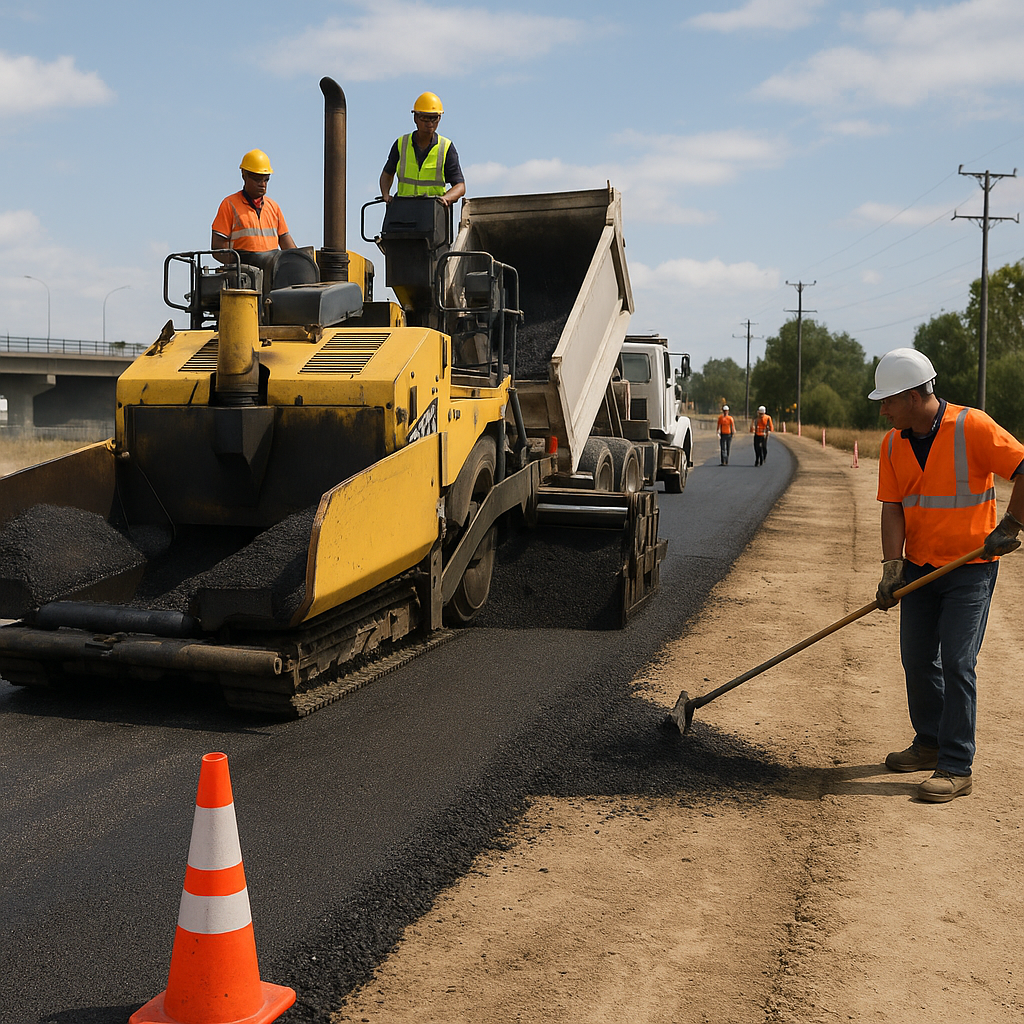
In a major stride toward sustainable infrastructure and circular economy transformation, the CSIR-Central Road Research Institute (CSIR-CRRI) has launched a pioneering national initiative to convert Waste Foundry Sand (WFS)—a large-scale industrial by-product—into a high-performance material for road construction. The move is expected to redefine how India manages industrial waste while accelerating eco-friendly infrastructure development.
The initiative has been formalized through a strategic Research & Development (R&D) partnership between CSIR-CRRI, the Institute of Indian Foundrymen (IIF), and Suyog Elements India Pvt. Ltd., in the presence of Dr. N. Kalaiselvi, Secretary, DSIR and Director General, CSIR. The collaboration aims to develop scalable, science-backed solutions for the utilization of foundry sand waste generated in the Coimbatore industrial cluster—India's largest foundry hub.
Tackling a High-Volume Industrial Waste Challenge
India's foundry sector, particularly the Coimbatore cluster with 800–1000 operational foundry units, produces massive volumes of waste foundry sand annually. Traditionally discarded in landfills, this material has posed persistent environmental challenges, including land degradation, dust pollution, and rising disposal costs.
The new initiative transforms this liability into an opportunity by enabling its reuse in road construction—an approach that aligns with India's growing infrastructure demands and sustainability commitments.
Science-Driven Innovation for Next-Generation Roads
At the heart of the project is a comprehensive scientific program led by CSIR-CRRI, focusing on:
-
Detailed material characterization of different types of foundry sand, including green sand and resin-bonded sand
-
Development of customized processing technologies
-
Engineering of application-specific road construction protocols
The initiative draws inspiration from the globally recognized steel slag road technology, which successfully demonstrated the conversion of industrial waste into durable and cost-effective road materials.
According to project lead Mr. Satish Pandey, the goal is to replicate and expand this "waste-to-wealth" model for the foundry sector, creating a new class of sustainable construction inputs.
Strategic Collaboration for Scalable Impact
The partnership leverages the strengths of each stakeholder:
-
CSIR-CRRI: Scientific research, validation, and technology development
-
Institute of Indian Foundrymen (IIF): Industry mobilization and knowledge dissemination across foundry clusters
-
Suyog Elements: Implementation, commercialization, and large-scale deployment
This integrated approach ensures that the innovation moves beyond laboratory success to real-world application across India's road network.
Advancing India's Circular Economy Goals
Dr. N. Kalaiselvi emphasized that the initiative reflects CSIR's commitment to sustainable development and circular economy principles, highlighting the importance of converting industrial by-products into valuable national assets.
The project is expected to deliver multiple high-impact outcomes:
-
Reduced dependence on natural aggregates, preserving finite natural resources
-
Efficient industrial waste management, minimizing landfill burden
-
Lower environmental footprint in road construction
-
Cost optimization in infrastructure projects
-
Accelerated adoption of green construction technologies
Transforming Infrastructure Through Innovation
Dr. Ch. Ravi Sekhar, Director of CSIR-CRRI, noted that the initiative represents a paradigm shift in infrastructure development—where waste materials are no longer discarded but integrated into the value chain as strategic resources.
The collaboration is poised to create a replicable national model for industry-research synergy, enabling similar waste-utilization frameworks across sectors such as steel, mining, and construction.
A Vision for Sustainable Growth
With India investing heavily in road infrastructure and urban expansion, the timing of this innovation is critical. By aligning industrial waste streams with infrastructure needs, the initiative supports both economic growth and environmental sustainability.
The event witnessed participation from senior scientists, policymakers, and industry leaders, underscoring strong institutional backing and signaling a nationwide push toward science-led, sustainable infrastructure solutions.








 Google News