



SA Risks Missing SDGs: Govt Calls for Stronger PPPs to Drive Sustainability
“Strong institutions, both public and private, are critical for ensuring that all people live in peaceful, just and inclusive societies,” Singh emphasised.
- Country:
- South Africa
With South Africa and many countries falling behind on the Sustainable Development Goals (SDGs), the government has issued a strong call for deeper collaboration between public and private sectors to accelerate environmental sustainability and inclusive development.
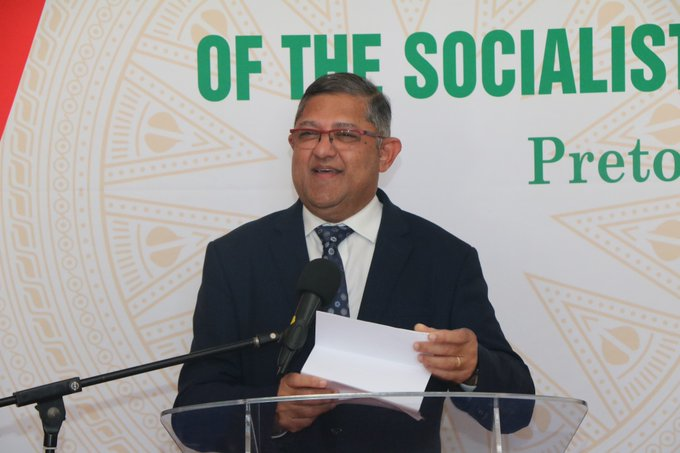
Speaking at the Future of Sustainability Conference in Johannesburg, Deputy Minister of Forestry, Fisheries and the Environment Narend Singh warned that fragmented efforts and financing gaps are slowing progress toward global sustainability targets.
SDG Progress Uneven as Global Challenges Intensify
The Deputy Minister highlighted that while some SDGs have shown progress over the past decade, many are:
-
Advancing too slowly
-
Experiencing uneven or regressive trends
He pointed to mounting global challenges:
-
Climate change and environmental degradation
-
Unsustainable consumption and production patterns
-
Resource scarcity impacting economies and public health
"These challenges can only be addressed collectively through coordinated international, national and local action," Singh said.
Public-Private Collaboration Key to Sustainable Development
At the heart of the government's message is the need for stronger institutional coordination and partnerships.
"Strong institutions, both public and private, are critical for ensuring that all people live in peaceful, just and inclusive societies," Singh emphasised.
Key focus areas include:
-
Aligning environmental policies across sectors
-
Building effective public-private partnerships (PPPs)
-
Enhancing governance and accountability frameworks
The conference brought together business leaders, policymakers, and entrepreneurs to promote actionable sustainability strategies, with a vision of transforming Africa into a zero-carbon, waste-free, and smart continent.
Financing Gaps Threaten SDG Implementation
A major concern raised was the lack of adequate development financing, particularly from developed nations.
-
Commitments by the Global North remain unmet
-
Risk of funds being redirected to competing global priorities
-
Developing countries like South Africa face growing implementation gaps
"This places countries like South Africa behind in their SDG implementation and broader development targets," Singh warned.
Community-Centric Conservation Models Showing Results
Highlighting successful initiatives, the Deputy Minister pointed to the People and Parks Programme, which has, for over 20 years:
-
Strengthened partnerships between communities and conservation authorities
-
Enabled co-management of protected areas
-
Shifted communities from beneficiaries to active stakeholders
This approach ensures that conservation efforts are inclusive and locally driven.
Biodiversity Economy Linking Conservation with Livelihoods
South Africa's Biodiversity Economy initiative is translating environmental protection into economic opportunity:
-
Promotes sustainable use of wildlife and natural resources
-
Generates income and livelihoods for local communities
-
Ensures development does not compromise ecological integrity
Waste Management Partnerships Driving Circular Economy
In the waste sector, stronger industry participation has led to:
-
Investment in collection, sorting, and recycling infrastructure
-
Growth of circular economy initiatives
-
Increased support for waste pickers and informal workers
-
Creation of green jobs at the local level
Unlocking ESG and Sustainability Investment Potential
Singh stressed that enhanced collaboration can help overcome systemic challenges such as:
-
Data gaps and limited availability
-
Weak or fragmented regulatory frameworks
-
Need for education and capacity building
These improvements are essential to fully unlock:
-
Environmental, Social, and Governance (ESG) frameworks
-
Sustainability-focused investments
Key Takeaways
-
South Africa and global community risk missing SDG targets
-
Strong push for public-private partnerships and policy alignment
-
Financing shortfalls remain a major bottleneck
-
Community-led conservation and circular economy models show promise
-
ESG and sustainability investment require better institutional capacity
A Call for Coordinated Action
The Deputy Minister concluded that innovative partnerships and stronger institutional capacity will be crucial to accelerating progress.
Such collaboration can act as a catalyst for sustainable development, enabling South Africa—and the broader African continent—to transition toward a resilient, inclusive, and environmentally sustainable future.








 Google News