



India Notifies New Toll Rules 2026: E-Notices, Double Penalty, and FASTag–VAHAN Integration to Enforce Compliance
The new rules, which came into effect on March 17, 2026, aim to modernize toll collection, plug revenue leakages, and strengthen compliance across India’s rapidly expanding National Highway network.
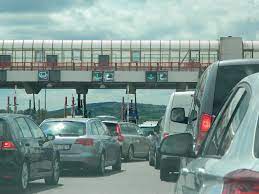
In a major push toward barrier-free tolling and stricter digital enforcement, the Government of India has notified the National Highways Fee (Determination of Rates and Collection) (Second Amendment) Rules, 2026, introducing a comprehensive, technology-driven system to track and recover unpaid toll charges.
The new rules, which came into effect on March 17, 2026, aim to modernize toll collection, plug revenue leakages, and strengthen compliance across India's rapidly expanding National Highway network.
First-Ever Legal Definition of 'Unpaid User Fee'
A key highlight of the amendment is the formal introduction of the term "unpaid user fee."It refers to toll charges applicable to vehicles whose passage has been recorded through Electronic Toll Collection (ETC) systems (such as FASTag), but where payment has not been received.
This definition provides a legal foundation for enforcement in an increasingly barrier-less tolling environment, where physical checkpoints are being phased out.
E-Notice System: Digital Enforcement at Scale
At the core of the reform is a technology-enabled e-notice mechanism under Rule 14, designed to automate toll recovery.
Under this system:
-
Vehicle owners will receive electronic notices detailing:
-
Vehicle registration number
-
Date and location of toll passage
-
Amount payable
-
-
Notices will be delivered via:
-
SMS
-
Email
-
Mobile applications
-
Dedicated online portal
-
Officials say this system will eliminate manual intervention, improve traceability, and ensure faster compliance.
FASTag Meets VAHAN: Full System Integration
The amendment mandates integration of the National Electronic Toll Collection (NETC) system with the VAHAN database, enabling seamless identification of vehicle owners.
This integration allows authorities to:
-
Track unpaid tolls in real time
-
Link dues directly to vehicle registration records
-
Enforce penalties through transport-related services
This move is expected to significantly enhance enforcement efficiency across states.
Penalty Structure: Pay Early or Pay Double
To deter non-payment while encouraging prompt compliance, the rules introduce a graded penalty mechanism:
-
Within 72 hours of e-notice:
-
Only the original toll amount is payable
-
-
After 72 hours:
-
The payable amount increases to twice the toll fee
-
This "early payment incentive" model balances enforcement with user convenience.
Grievance Redressal with Strict Timelines
The amendment also introduces a time-bound grievance redressal system, ensuring fairness and accountability.
-
Vehicle owners can file complaints within 72 hours of receiving the e-notice
-
Authorities must resolve the issue within 5 days
-
If unresolved within this period, the claim automatically lapses
This provision is expected to reduce disputes and build trust in digital toll enforcement.
Non-Payment Could Block Vehicle Services
For cases where dues remain unpaid beyond 15 days, and no grievance is pending:
-
The unpaid amount will be flagged in the VAHAN database
-
Authorities may impose restrictions on vehicle-related services, such as:
-
Registration updates
-
Fitness certificates
-
Permit renewals
-
This creates a strong compliance mechanism by linking toll dues with essential vehicle services.
Boost to Transparency and Investor Confidence
The government highlighted that the amendment will:
-
Enhance transparency in toll operations
-
Reduce revenue leakages
-
Strengthen financial viability of highway projects
-
Improve investor confidence in infrastructure investments
India currently has over 1.4 lakh km of National Highways, with a growing share of toll-based and PPP-funded projects. Efficient toll collection is critical for sustaining infrastructure expansion.
Enabling Barrier-Free Tolling Future
The rules are aligned with India's transition toward next-generation tolling systems, including:
-
GPS-based tolling
-
Open-road tolling (no physical barriers)
-
Fully digital payment ecosystems
By establishing a legal and technological backbone for enforcement, the amendment sets the stage for a seamless, high-speed highway experience.
A Step Toward Smarter Mobility Governance
With digital notices, automated enforcement, and integrated databases, the new rules represent a shift from manual toll collection to data-driven mobility governance.
As India continues to invest heavily in road infrastructure, the success of such reforms will play a crucial role in ensuring efficiency, accountability, and user compliance.








 Google News