



SARS Cracks Down on Alleged R45 Million Tax Fraud, Targets Internal Corruption Network
The operation forms part of a broader national crackdown on illicit economic activity and signals a firm stance against corruption within and outside the tax authority.
- Country:
- South Africa
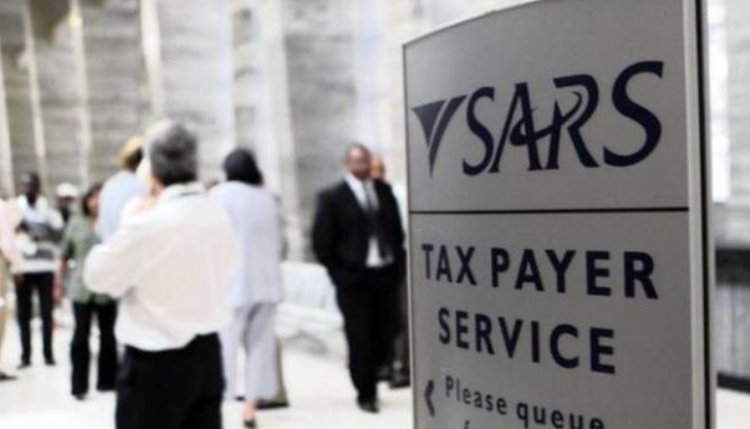
The South African Revenue Service (SARS) has intensified its fight against corruption and tax evasion, executing search, seizure and preservation orders against six individuals accused of under-declaring more than R45 million in taxable income, resulting in an estimated R18 million loss to the fiscus.
The operation forms part of a broader national crackdown on illicit economic activity and signals a firm stance against corruption within and outside the tax authority.
Internal and External Collusion Under Investigation
SARS confirmed that the investigation involves six current and former employees, along with associated taxpayers and traders, allegedly linked to a corrupt customs-inspection scheme.
According to the revenue service, the suspects are believed to have:
-
Colluded with clearing agents and importers
-
Manipulated physical customs inspections
-
Accepted cash bribes in exchange for favourable treatment
These actions allegedly enabled the under-declaration of taxable income and evasion of duties, undermining the integrity of South Africa's tax and customs systems.
"No One Is Above the Law" — Kieswetter
SARS Commissioner Edward Kieswetter issued a strong warning, stating that corruption—particularly within the institution—is a "red line" that will not be tolerated.
"We cannot tolerate any acts of corruption. This is a red line that no one must cross, and no position inside or outside SARS places anyone above the law," Kieswetter said.
He added that SARS will continue to:
-
Detect and investigate criminal conduct
-
Disrupt illicit schemes
-
Recover lost revenue
Part of National Illicit Economy Crackdown
The enforcement action aligns with the National Illicit Economy Disruption Programme, announced by President Cyril Ramaphosa during the State of the Nation Address (SONA).
SARS said its Illicit Economy Strategy prioritises tackling:
-
Corruption within government systems
-
Fraud and collusion in customs processes
-
Organised economic crime
Officials warned that such activities:
-
Distort fair competition
-
Displace legitimate businesses
-
Undermine economic growth and job creation
Joint Law Enforcement Effort
SARS is working closely with the:
-
South African Police Service (SAPS)
-
National Prosecuting Authority (NPA)
The collaboration aims to ensure that investigations lead to successful criminal prosecutions, reinforcing accountability across the system.
Making Non-Compliance "Hard and Costly"
The latest operation reflects SARS's strategic goal of strengthening compliance by:
-
Simplifying compliance for honest taxpayers
-
Increasing enforcement against non-compliance
-
Imposing significant consequences for tax evasion
"SARS's enforcement actions align with our objective to make compliance easier and noncompliance hard and costly," the agency said.
Protecting Public Trust and State Integrity
Kieswetter praised investigative teams while acknowledging the broader impact of corruption within public institutions.
"Far too many of our employees work diligently… for their efforts to be undermined by a few who choose to collude with criminals," he said.
He stressed that corrupt officials not only violate the law but also betray public trust and weaken the state's ability to serve its citizens.
A Strong Signal to Offenders
The case sends a clear message that SARS is stepping up enforcement against both internal misconduct and external tax evasion schemes.
With billions in revenue at stake, authorities say sustained action against the illicit economy is critical to safeguarding:
-
Public finances
-
Service delivery
-
Long-term economic stability








 Google News