



KiwiRail Posts $73m Surplus as Freight Volumes Jump 7%
The result marks a significant milestone in KiwiRail’s long-term performance programme, with gains across freight, network resilience, and passenger operations.
- Country:
- New Zealand
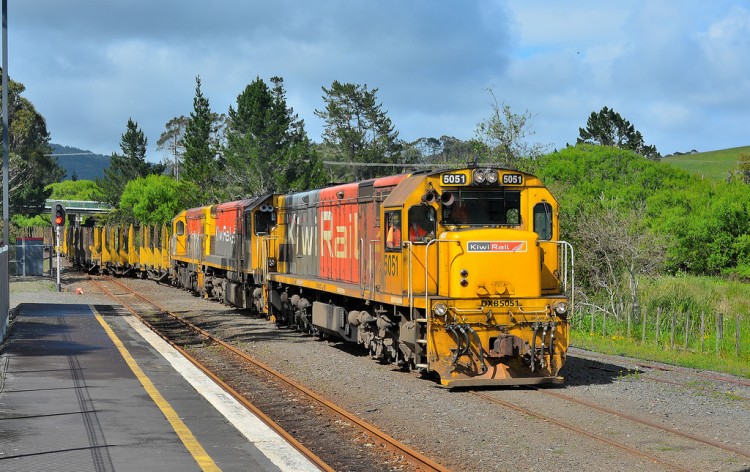
KiwiRail has delivered a $73.4 million half-year operating surplus and lifted freight volumes by 7 percent, signalling what Rail Minister Winston Peters describes as a decisive turnaround driven by reliability, infrastructure renewal, and commercial discipline.
"We make no apologies for bothering to fix New Zealand's rail system after decades of mismanagement and malaise," Mr Peters says. "We are seeing the benefit of the taxpayer's investment."
The result marks a significant milestone in KiwiRail's long-term performance programme, with gains across freight, network resilience, and passenger operations.
Freight Growth and Operating Surplus
The $73.4 million operating surplus reflects improved cost control and rising customer confidence, underpinned by stronger schedule reliability — a key driver of freight volumes in a competitive logistics market.
"Schedule reliability drives customers and volumes," Mr Peters says. "The steady improvement in reliability is thanks to the firm focus on this metric by every worker, combined with vastly better locomotives, shunts, wagons and carriages."
Rail freight remains one of the most cost-effective and low-emissions bulk transport modes, particularly for heavy commodities such as logs, dairy, steel and containerised goods. A 7 percent increase in volumes represents a substantial uplift in network utilisation during a challenging freight environment.
Rolling Stock Renewal Nears Completion
A central pillar of KiwiRail's turnaround has been large-scale rolling stock replacement and modernisation.
New freight wagons are now rolling off the production line at the rebuilt Dunedin Hillside Workshops, restoring domestic rail manufacturing capability and strengthening supply chain resilience.
Yard operations have been upgraded with new shunt locomotives, improving efficiency in freight assembly and distribution hubs.
In the South Island, the ageing locomotive fleet is set to be fully replaced by state-of-the-art Stadler locomotives — modern, fuel-efficient engines expected to significantly reduce breakdowns and improve hauling capacity.
"New Zealand's freight rolling stock will shortly be the youngest in the world," Mr Peters says.
Younger fleets typically deliver:
-
Lower maintenance costs
-
Improved fuel efficiency
-
Higher reliability rates
-
Greater hauling power and payload efficiency
Infrastructure Resilience Paying Off
Network durability has also strengthened following legislative changes in 2020 that aligned rail funding more closely with road funding models, with an increased emphasis on maintenance and asset renewal.
"The network is improving because we changed the law to fund rail like we fund roads, but with an emphasis on maintaining infrastructure better and replacing old assets," Mr Peters says.
Recent severe weather events tested the upgraded network. Two major storms in the past month resulted in just one washout, compared with past years where multi-day shutdowns from slips and flood damage were common.
The Infrastructure Commission recently recommended allocating 60 percent of infrastructure funding to maintenance and renewals. Rail investment is already exceeding that benchmark, with projections showing up to 75 percent of rail infrastructure spending over the next decade directed toward maintenance and asset replacement.
Interislander Delivers Peak-Season Reliability
KiwiRail's Interislander service also recorded strong performance over the peak Christmas and New Year period, achieving 100 percent reliability.
During the busiest travel window of the year, Interislander moved:
-
More than 52,000 passengers
-
Over 14,000 vehicles
The result caps off a solid half-year for the Cook Strait service, which plays a critical role in linking freight and tourism flows between the North and South Islands.
Commercial Discipline in a Tough Freight Market
Rail freight operates in a highly competitive environment alongside road and coastal shipping. Rising fuel costs, global supply chain pressures, and fluctuating commodity volumes continue to challenge the sector.
"Freight is a tough business," Mr Peters says. "But with a firm focus on reliability, cost control, and a strategy set years ago with experience and commonsense, the hard work does pay off."
The Minister acknowledged the leadership of KiwiRail Chair Suzanne Tindal and the organisation's workforce, including operational teams, track gangs and train crews.
The half-year performance strengthens the case that sustained investment in rolling stock, infrastructure maintenance, and operational discipline is beginning to deliver measurable commercial and service returns.
ALSO READ
-
England's Stunning Comeback: Jacks and Ahmed's Heroics Secure Thrilling Win Over New Zealand
-
England Triumphs Over New Zealand in Dramatic T20 Clash
-
Thrilling Cricket Clash: England vs New Zealand Recap
-
Already qualified for semifinals, England beat New Zealand by four wickets to top Super Eights Group 2 of T20 World Cup.
-
Thrilling Showdown at T20 World Cup: New Zealand vs England








 Google News