



Zero Defect to Drive $30T Economy: Piyush Goyal at Quality Conclave
Joining the Conclave virtually, the Minister emphasised that no nation can progress merely as a consumer — it must become a globally recognised producer of high-quality goods and services.
- Country:
- India
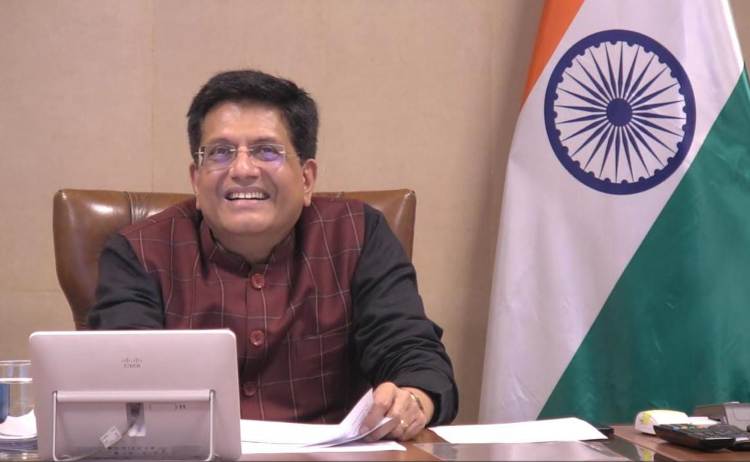
Union Minister of Commerce and Industry Shri Piyush Goyal today asserted that quality must become the defining mantra of India's manufacturing and export ecosystem, stating that Prime Minister Shri Narendra Modi's vision of "zero defect, zero effect" will anchor India's rise in the Amrit Kaal.
Addressing the first National Quality Conclave, organised by the Department for Promotion of Industry and Internal Trade (DPIIT) in partnership with the Quality Council of India (QCI), Shri Goyal said India's ambition to become a $30–35 trillion economy by 2047 rests on three core pillars: zero defect (quality), zero effect (sustainability), and equitable opportunity (inclusivity).
Quality Key to $2 Trillion Export Goal
Joining the Conclave virtually, the Minister emphasised that no nation can progress merely as a consumer — it must become a globally recognised producer of high-quality goods and services.
"Brand India must stand for quality, reliability and trust," he said.
Noting that India has been the world's fastest-growing large economy for four consecutive years and is poised to become the third-largest global economy within the next two to two-and-a-half years, Shri Goyal underlined that achieving the $2 trillion export target — $1 trillion in merchandise and $1 trillion in services within six to seven years — will require uncompromising quality standards.
Leveraging FTAs Covering Two-Thirds of Global GDP
The Minister highlighted India's expanding global trade footprint, pointing out that nine Free Trade Agreements (FTAs) concluded over the past three to three-and-a-half years now cover 38 developed countries, accounting for nearly two-thirds of global GDP and trade.
These agreements, he said, create significant export opportunities in textiles, leather, footwear and pharmaceuticals — provided Indian products consistently meet international benchmarks.
He urged industry to capitalise on the expanded market access and address India's still modest share in global trade, particularly in labour-intensive sectors.
Ending the "Export Quality" Divide
Recalling a time when Indian consumers sought "export quality" products, Shri Goyal stressed the need to eliminate the dual-quality ecosystem and establish uniform global standards for both domestic and export markets.
He commended DPIIT and QCI for conducting extensive grassroots consultations across clusters to embed quality awareness at the shop-floor level.
Five-Pillar Quality Action Agenda
To institutionalise quality across manufacturing, Shri Goyal outlined a five-pillar action framework:
-
Defined SOPs and strict compliance, with continuous inspection from raw materials to finished products.
-
Skilling and re-skilling to reduce wastage and enhance productivity, especially in sectors like textiles.
-
Gap analysis and global benchmarking to improve competitiveness and sustainability outcomes.
-
Streamlined testing and certification to reduce cost and time burdens.
-
Modern shared testing infrastructure with automated facilities across clusters.
He assured that funding would not be a constraint for strengthening high-quality testing infrastructure and encouraged industry to seek support under the Export Promotion Mission (EPM) for compliance with global standards such as REACH, CBAM, SPS and TBT measures.
Replacing the "Chalta Hai" Mindset
Quoting Prime Minister Narendra Modi, Shri Goyal reiterated that India must become synonymous with guaranteed quality globally. He called for replacing the "chalta hai" (it will do) mindset with a culture of excellence across all levels — from boardrooms to shop floors and laboratories.
Invoking the metaphor of "Samudra Manthan," he said the Conclave's consultative process must yield the nectar of quality and trust in everyday industrial practice.
Sector-Focused, Evidence-Based Engagement
The National Quality Conclave represents a first-of-its-kind initiative structured around on-ground consultations with industry and MSMEs to incorporate shop-floor insights into policy formulation.
Series 1 of the Conclave focused on four priority sectors with high export and employment potential — textiles, leather, footwear and pharmaceuticals.
Over two months, the programme conducted:
-
25+ consultations and 15+ "Gunvatta Manthan" dialogues in leather
-
30+ consultations and 10+ dialogues in textiles
-
7+ consultations in pharmaceuticals
-
Engagement across 14 manufacturing clusters
-
Interaction with 50+ government and regulatory bodies
The outcomes will inform a National Quality Roadmap for Manufacturing, guiding coordinated action among government, regulators and industry.
Quality as Destination, Not Milestone
Union Minister of State for Commerce and Industry Shri Jitin Prasada emphasised that quality-led manufacturing is critical as global opportunities expand. DPIIT Secretary Shri Amardeep Singh Bhatia described quality improvement as a long-term commitment essential to strengthening global trust and supply chain integration.
QCI Chairperson Shri Jaxay Shah stressed that quality must become a daily discipline rather than a compliance formality, stating that for Viksit Bharat 2047, quality is not just the pathway — it is the destination.
The National Quality Conclave will continue as a sustained series of sector-specific engagements aimed at embedding quality deeply within India's industrial ecosystem, reinforcing the country's aspiration to emerge as a trusted, reliable and globally competitive manufacturing powerhouse.
ALSO READ
-
BJP attacks Congress over 'missing' charge against Piyush Goyal, says he is on medical rest
-
Piyush Goyal Launches 7 New Export Promotion Measures to Empower MSMEs
-
India-US interim trade pact likely to be operationalised in April, says Commerce Minister Piyush Goyal.
-
Piyush Goyal meets Lenovo, Carrier leaders to deepen localisation opportunities
-
India will also get zero duty access on textiles, similar to Bangladesh: Piyush Goyal








 Google News