



UN Warns Haitian Gangs Trafficking Children at Alarming Scale
UN officials describe the findings as among the most alarming assessments yet of how deeply children have become entangled in Haiti’s spiraling security crisis.
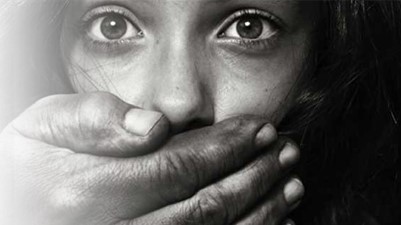
A new United Nations report has laid bare the systematic and widespread trafficking of children by Haitian gangs, warning that the crisis threatens not only the country's present but also its future generations.
The report, released Friday by the UN Integrated Office in Haiti (BINUH) and the Office of the UN High Commissioner for Human Rights (OHCHR), reveals that the majority of the 26 armed gangs currently operating in Haiti are actively involved in child trafficking and exploitation.
UN officials describe the findings as among the most alarming assessments yet of how deeply children have become entangled in Haiti's spiraling security crisis.
"Children in Haiti are being robbed of their childhoods and their futures," said UN High Commissioner for Human Rights Volker Türk. "The impact and long-term consequences of child trafficking are devastating for the victims and their families, as well as for the stability of the country."
Children at the Frontlines of Gang Control
While comprehensive national data remains unavailable, the scale of exposure is staggering. In 2024, the UN estimated that more than 500,000 children were living in areas under gang control. Meanwhile, escalating violence has displaced over 1.4 million people nationwide — more than half of them children.
The report details how children are trafficked into a spectrum of criminal activities. Some are forced to run errands, monitor security forces, transport weapons, or collect extortion payments. Others are coerced into far more violent roles, including kidnappings, targeted killings, destruction of property, and acts of sexual violence.
In many cases, recruitment tactics blend coercion and manipulation. Children are enticed with promises of power, protection, or social status. Others are forced through threats, hunger, drugs, or direct violence. Those most at risk include children from extremely poor and marginalized families, street-connected children, and those living in displacement camps.
Structural Crisis Fuels Trafficking
The report underscores that child trafficking in Haiti is not merely a byproduct of gang activity but the result of overlapping structural and situational drivers.
Deep-rooted poverty, weak institutions, limited access to education, and social exclusion create fertile ground for exploitation. These systemic vulnerabilities are compounded by armed violence, state fragility, and widespread impunity.
Haiti has endured years of political instability and institutional breakdown, leaving many neighborhoods effectively governed by gangs. In such environments, children face shrinking access to schools, healthcare, and safe community spaces — key protective buffers that have steadily eroded.
Misidentification and Extrajudicial Killings
One of the report's most troubling findings is the treatment of trafficked children as perpetrators rather than victims.
Law enforcement officials frequently fail to recognize exploited children as victims of trafficking. In some documented cases, children accused of gang affiliation have been summarily executed by police or killed by self-defense groups.
The UN warns that criminalizing exploited children not only violates international human rights law but also deepens cycles of violence and trauma.
Seven-Pillar Human Rights Strategy Proposed
In what officials describe as a comprehensive and innovative rights-centered approach, BINUH and OHCHR are calling for a coordinated national and international strategy built around seven pillars:
-
Expanding social protection programs for vulnerable families in the capital
-
Reinforcing schools as protective spaces
-
Developing child-friendly spaces outside school settings
-
Increasing youth vocational training and employment opportunities
-
Strengthening rights-compliant law enforcement
-
Prioritizing rehabilitation and reintegration over punishment
-
Improving accountability mechanisms for child traffickers
"For the immediate and long-term future of Haiti, it is crucial that national authorities and their international partners work hand-in-hand to build stronger communities and social protection mechanisms," said Carlos Ruiz Massieu, Special Representative of the UN Secretary-General in Haiti and Chief of BINUH. "Children must be at the center of our response to the security crisis in Haiti."
Arms Flow and Enforcement Urged
High Commissioner Türk stressed that security operations must adhere strictly to international human rights law, particularly as Haiti's newly created Gang Suppression Force begins its work.
"It is essential that children's rights are fully respected during the planning and conduct of operations against gangs," he said.
Türk also highlighted the urgent need to curb the illicit flow of firearms into Haiti, which continues to fuel gang dominance and recruitment.
"The UN arms embargo must be enforced without delay if we want to stop the never-ending cycle of violence," he added.
A Generation at Risk
The report concludes with a stark warning: without immediate, coordinated, and adequately funded intervention, Haiti risks losing an entire generation to exploitation, trauma, and normalized violence.
By framing child trafficking as both a human rights emergency and a national stability threat, the UN is urging policymakers, donors, and security actors to recalibrate their approach — placing child protection at the core of Haiti's security and recovery strategy.
ALSO READ
-
Interstate Child Trafficking Racket Uncovered Between Assam and Arunachal Pradesh
-
Unmasking Genocide: UN Report Alleges Atrocities in Sudan's al-Fashir
-
‘Like a scene out of a horror movie’: UN report warns of war crimes in Sudan’s El Fasher
-
Surrogacy Scam: Doctor Arrested for Money Laundering and Child Trafficking
-
Himachal: Two arrested for child trafficking in Hamirpur; 2 minors rescued








 Google News