



UN Rights Chief Launches $400m Appeal for 2026, Warns World Cannot Afford a Human Rights System in Crisis
Speaking to Member States on Thursday, Türk stressed that the world cannot afford a human rights system pushed into crisis by chronic underfunding.
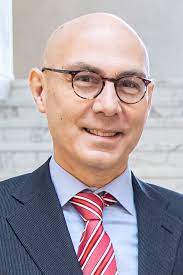
UN High Commissioner for Human Rights Volker Türk has launched a USD 400 million funding appeal for 2026, warning that mounting global crises demand stronger — not weaker — investment in human rights protection.
Speaking to Member States on Thursday, Türk stressed that the world cannot afford a human rights system pushed into crisis by chronic underfunding.
"The cost of our work is low; the human cost of underinvestment is immeasurable," he said.
"In times of conflict and in times of peace, we are a lifeline for the abused, a megaphone for the silenced, a steadfast ally to those who risk everything to defend the rights of others."
Human Rights Work Delivering Direct Impact Worldwide
Türk highlighted the scale of the UN Human Rights Office's work in 2025, despite increasing financial strain.
Across 87 countries, UN human rights staff:
-
Observed more than 1,300 trials
-
Supported 67,000 survivors of torture
-
Documented tens of thousands of human rights violations
-
Contributed to the release of more than 4,000 people from arbitrary detention
"Our reporting provides credible information on atrocities and human rights trends at a time when truth is being eroded by disinformation and censorship," Türk said.
He noted that UN human rights reporting informs deliberations in both the Security Council and Human Rights Council, and is widely cited by international courts as critical evidence for accountability.
Human Rights at the Core of Peace, Stability and Economic Justice
Türk emphasized that addressing inequality and respecting economic and social rights are essential foundations for peace.
"Human rights make economies work for everyone, rather than deepening exclusion and breeding instability," he said.
In 2025, the Office worked with more than 35 governments on the concept of the "human rights economy," helping align economic policies with human rights principles.
Examples included:
-
Supporting Djibouti in analysing its health budget through a disability rights lens
-
Providing human rights analysis to UN Country Teams working on sustainable development goals
Severe Funding Cuts Already Weakening Protection Efforts
Türk outlined the direct consequences of reduced funding in 2025, including:
-
Only 5,000 monitoring missions conducted, down from 11,000 in 2024
-
Myanmar programme cut by more than 60%
-
Reduced support for prison demilitarisation and justice reforms in Honduras
-
Discontinued advocacy for nearly 600 detainees held without legal basis in Chad
"These cuts translate into fewer protections for people at risk," Türk warned.
Liquidity Crisis Disrupting the Wider UN Human Rights System
The UN's broader liquidity crisis has also affected treaty bodies and special mechanisms.
As a result:
-
35 State party dialogues by UN Treaty Bodies could not take place
-
Half of planned visits by the Sub-Committee on Prevention of Torture were cancelled
-
Special Rapporteurs faced curtailed country visits
-
Investigative bodies under the Human Rights Council were unable to fully fulfil mandates
Loss of Staff and Closure of Country Programmes
Türk expressed regret that the Office lost approximately 300 staff out of 2,000 in 2025 and was forced to close or drastically reduce its presence in 17 countries.
This has erased entire programmes supporting endangered and marginalised communities, from Colombia and Guinea-Bissau to Tajikistan.
"All this is weakening our 'Protection by Presence' — a simple idea with powerful impact: that the physical presence of trained human rights officers on the ground deters violations and reduces harm," Türk said.
Funding Shortfalls Driving the 2026 Appeal
Türk detailed the Office's severe funding gap in 2025:
-
Approved regular budget: USD 246 million
-
Received: USD 191.5 million
-
Shortfall: USD 54.5 million
Voluntary contributions also fell far below needs:
-
Requested: USD 500 million
-
Received: USD 257.8 million
He thanked the 113 funding partners who contributed, helping to save and improve lives.
2026 Outlook: Lower Regular Budget, Greater Urgency
For 2026, the UN General Assembly approved a regular budget of USD 224.3 million, based on assessed contributions.
This is:
-
10% lower than 2025, with uncertainty remaining due to the liquidity crisis.
The Office is therefore requesting an additional USD 400 million in voluntary contributions through its 2026 Appeal.
"Historically, human rights account for an extremely small portion of all UN spending," Türk said.
"We need to step up support for this low-cost, high-impact work that helps stabilise communities, builds trust in institutions, and supports lasting peace."
He also called for more unearmarked and timely contributions to ensure rapid response.
"Human rights cannot wait," Türk concluded.








 Google News