



ECI Briefs 1,444 Central Observers Ahead of Assam, Bengal, TN Polls
The briefings were led by Chief Election Commissioner Shri Gyanesh Kumar, along with Election Commissioners Dr Sukhbir Singh Sandhu and Dr Vivek Joshi.
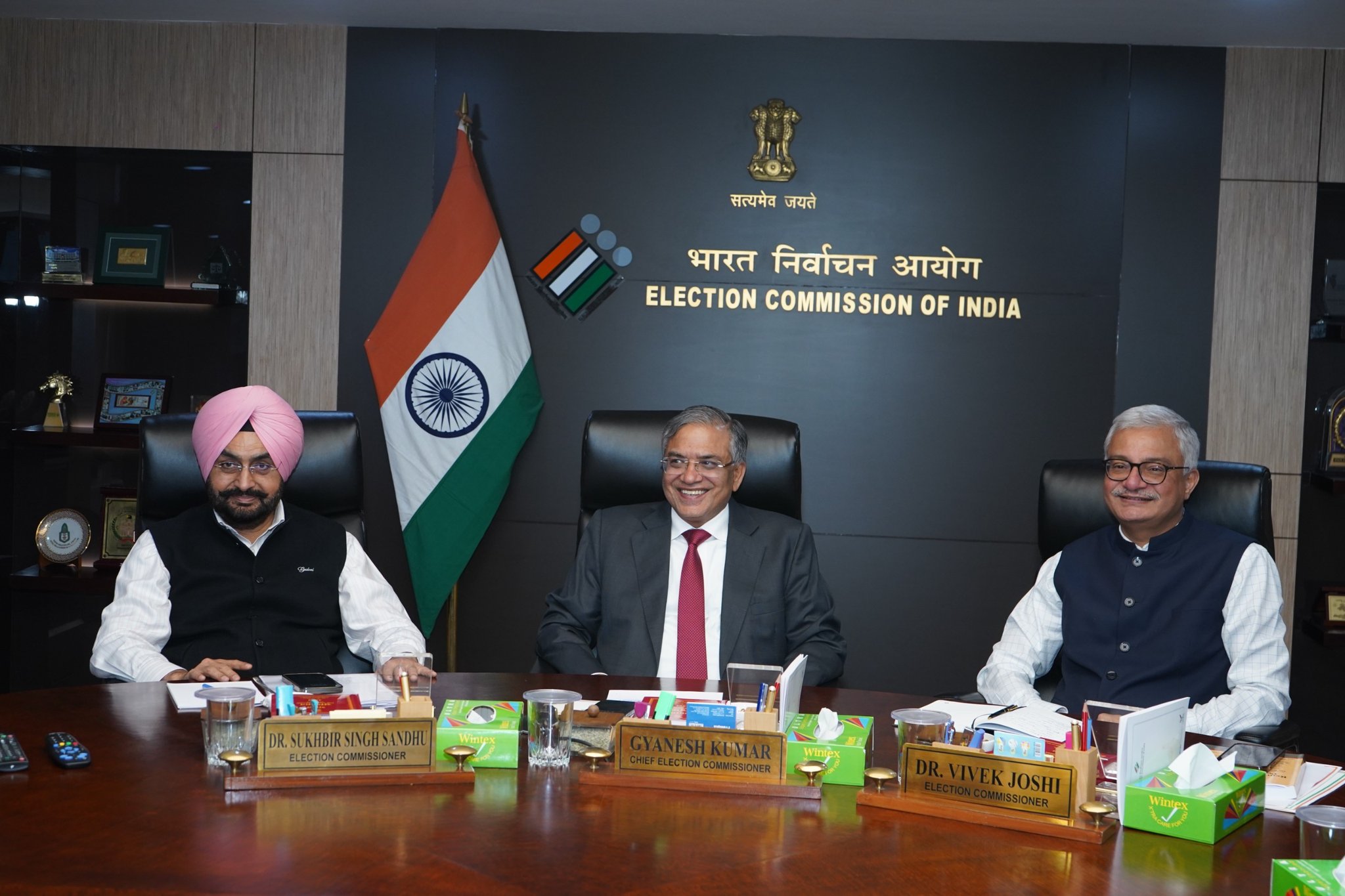
The Election Commission of India (ECI) on Wednesday began a series of comprehensive briefing meetings for Central Observers to be deployed for the forthcoming General Elections to the Legislative Assemblies of Assam, Kerala, Puducherry, Tamil Nadu and West Bengal.
A total of 1,444 officers have been called for the briefings, including 714 General Observers, 233 Police Observers and 497 Expenditure Observers. The sessions are being conducted in three batches over two days – 5 and 6 February 2026 – at the India International Institute of Democracy and Election Management (IIIDEM), New Delhi.
"Beacons of the Election Commission"
The briefings were led by Chief Election Commissioner Shri Gyanesh Kumar, along with Election Commissioners Dr Sukhbir Singh Sandhu and Dr Vivek Joshi.
Addressing the observers, the CEC described them as the "beacons of the Election Commission of India", entrusted with ensuring free, fair and transparent elections across 824 Assembly constituencies that will go to the polls.
"Your presence in the field must energise the entire election machinery and reinforce public confidence in the electoral process," Shri Gyanesh Kumar said.
Role as Friend, Philosopher and Guide
Election Commissioner Dr Sukhbir Singh Sandhu emphasised that observers should function as a friend, philosopher and guide to election officials in the field.
He stressed that:
-
The arrival of observers should be well publicised
-
Observers must remain easily accessible to electors and stakeholders
-
Grievances of voters must be redressed swiftly to avoid even the perception of bias or favouritism
Strict Adherence to ECI Instructions
Election Commissioner Dr Vivek Joshi underlined the importance of implementing ECI directions in letter and spirit, while upholding the core democratic values of impartiality and neutrality.
He also directed observers to ensure that Voter Information Slips (VIS) are distributed well in advance, so that voters face no inconvenience on polling day.
Focus on Technology, Media and Voter Convenience
During the sessions, senior ECI officials briefed observers on:
-
Preparation and revision of electoral rolls
-
Conduct of elections in the five poll-bound States and Union Territory
-
Use of IT applications and digital platforms
-
Media-related protocols during elections
The Commission also held interactive doubt-clearing sessions, allowing observers to seek clarifications on operational and legal aspects of election management.
Eyes and Ears of the Commission
As the eyes and ears of the ECI, observers were instructed to:
-
Familiarise themselves thoroughly with election laws, rules and guidelines
-
Provide direct feedback and inputs to the Commission
-
Ensure strict and impartial compliance with ECI directions
They were also directed to remain fully accessible to political parties and candidates, and to ensure that voter grievances are addressed in a timely manner.
Observers have been tasked with visiting polling stations to oversee the implementation of recent ECI initiatives aimed at voter convenience, including the provision of Assured Minimum Facilities (AMFs).
Constitutional Mandate
The Election Commission appoints Central Observers under the plenary powers conferred by Article 324 of the Constitution and Section 20B of the Representation of the People Act, 1951. Their role is critical in ensuring the efficient, effective and credible management of elections at the field level.
Tags: Election Commission of India, Central Observers, Assembly elections 2026, Assam, West Bengal, Tamil Nadu, electoral reforms, free and fair polls








 Google News