



WHO Unveils TB Testing Tools on World TB Day 2026, Urges Urgent Global Scale-Up
At the centre of WHO’s latest push are new near point-of-care diagnostic tests—portable, battery-operated devices capable of delivering results in under one hour.
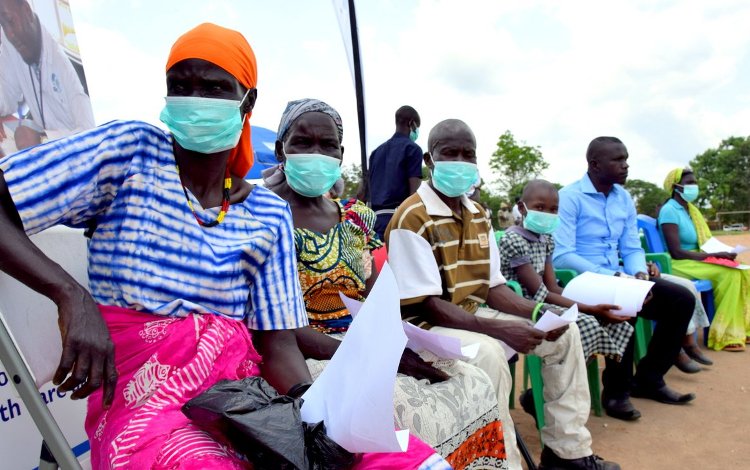
Marking World TB Day 2026, the World Health Organization (WHO) has launched a new wave of diagnostic innovations aimed at transforming the fight against tuberculosis (TB), calling on countries to urgently scale up access to faster, cheaper, and more accessible testing technologies.
With TB still claiming over 3,300 lives daily and infecting more than 29,000 people each day, WHO warns that progress is at risk unless countries accelerate adoption of these next-generation tools.
Game-Changing Diagnostics Bring Testing Closer to Patients
At the centre of WHO's latest push are new near point-of-care diagnostic tests—portable, battery-operated devices capable of delivering results in under one hour.
These innovations are designed to overcome longstanding barriers in TB detection:
-
Lower cost: Less than half the price of many existing molecular tests
-
Portability: Can operate without stable electricity supply
-
Speed: Same-day diagnosis and faster treatment initiation
-
Accessibility: Usable in primary care and remote settings
"These tools could be truly transformative," said WHO Director-General Dr Tedros Adhanom Ghebreyesus. "They bring fast, accurate diagnosis closer to people, saving lives and reducing transmission."
Multi-Disease Potential Expands Impact
Beyond TB, the same diagnostic platforms can be adapted to detect HIV, mpox, and HPV, enabling countries to move toward integrated, one-stop diagnostic services—a major step toward more efficient and patient-centred healthcare systems.
Tongue Swabs and Pooled Testing Expand Reach
WHO's updated guidelines also introduce simpler and more inclusive testing methods:
-
Tongue swabs: A non-invasive alternative for patients unable to produce sputum—particularly benefiting children, adolescents, and severely ill individuals
-
Sputum pooling: Combining samples from multiple individuals to reduce testing costs and laboratory burden
These approaches are expected to:
-
Expand testing coverage among high-risk populations
-
Improve efficiency in resource-constrained settings
-
Accelerate detection of drug-resistant TB, including rifampicin-resistant strains
Progress at Risk Amid Funding Cuts
Despite major gains—83 million lives saved since 2000—WHO warns that global progress is under threat due to declining health funding and slow uptake of rapid diagnostics.
Key challenges include:
-
Continued reliance on centralised laboratory systems
-
High costs limiting widespread adoption
-
Delays in diagnosis due to sample transport
"Without faster diagnosis, we risk reversing decades of progress," WHO officials cautioned.
Closing the Diagnostic Gap
WHO is urging countries to deploy a comprehensive testing network, combining:
-
Point-of-care urine tests for people living with HIV
-
Near point-of-care molecular diagnostics
-
Community-based screening approaches
This integrated strategy aims to:
-
Ensure universal access to TB testing
-
Reduce delays in treatment initiation
-
Break chains of transmission
World TB Day 2026: A Call for Coordinated Global Action
Under the theme "Yes! We can end TB: Led by countries, powered by people," WHO has outlined five priority actions:
-
Scale up innovative diagnostics across health systems
-
Strengthen people-centred care and community engagement
-
Build resilient health systems for long-term preparedness
-
Address social and economic drivers of TB
-
Protect TB services amid global crises
Economic Case for Investment
WHO emphasised that investing in TB control delivers strong returns:
-
Up to $43 in economic and health benefits for every $1 invested
"This is not just a health priority—it's a smart economic decision," said Dr Tereza Kasaeva, Director of WHO's TB programme.
Innovation Pipeline Still Underfunded
While new diagnostics mark significant progress, WHO highlighted a major funding gap in TB research.
-
Estimated annual need: $5 billion
-
Current funding: Significantly below target
This shortfall is slowing the development of:
-
New TB vaccines
-
Advanced treatment regimens
-
Next-generation diagnostic tools
To address this, WHO is advancing initiatives like the TB Vaccine Accelerator Council, aimed at aligning global stakeholders and speeding up vaccine development and equitable access.
TB as a Pillar of Global Health Security
WHO is calling on governments to elevate TB as a central priority within universal health coverage and global health security frameworks.
With new tools now available, officials stress that the focus must shift from innovation to rapid implementation at scale.
"What is needed now is decisive leadership and urgent action," WHO said. "The tools exist—now they must reach the people who need them most."
ALSO READ
-
Empowering Women Leaders: Ladies Who Lead Revolutionizes Professional Networking
-
Kompella Venkata Ramana Murty Joins SEBI as Whole-Time Member
-
India's Mission-Mode Drive to Eliminate Tuberculosis: TB Mukt Bharat Campaign
-
Ensuring that Strait of Hormuz remains open, secure and accessible is essential for whole world: PM Modi after talks with President Trump.
-
Mizoram's Battle Against Tuberculosis: Aiming for TB-Free Villages








 Google News