



Africa’s $400 Billion Financing Gap Spurs New Era of Global Partnerships, AfDB Leads Co-Financing Push
At the centre of this strategy is a major shift toward deep, structured global partnerships, designed to unlock capital at scale and maximise development impact.
- Country:
- Ivory Coast
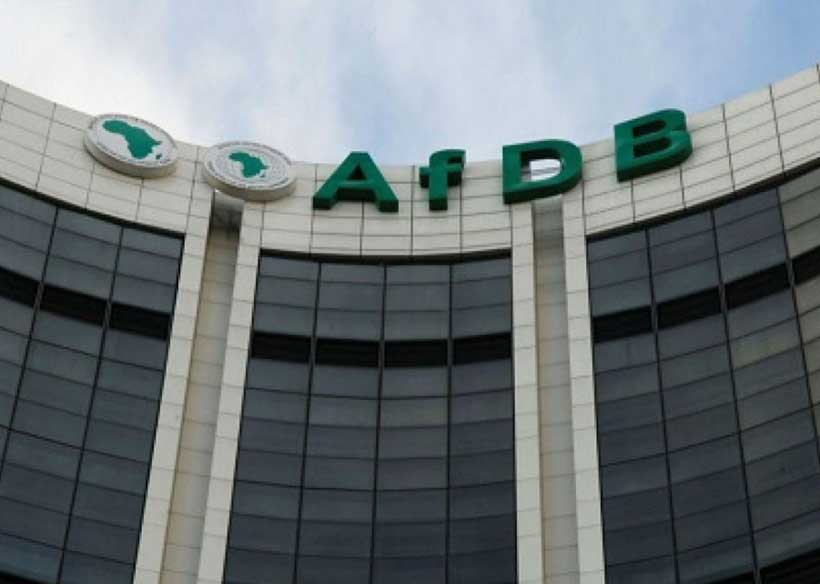
Africa's development ambitions are entering a decisive phase as the African Development Bank (AfDB) intensifies efforts to mobilise large-scale co-financing, targeting an estimated $400 billion annual financing gap that continues to constrain growth, infrastructure expansion, and economic transformation across the continent.
At the centre of this strategy is a major shift toward deep, structured global partnerships, designed to unlock capital at scale and maximise development impact.
A New Financing Reality: Collaboration Over Isolation
Despite being Africa's leading multilateral development finance institution, the AfDB currently contributes less than 10% of the continent's total financing needs, underscoring the urgency of leveraging external capital and partnerships.
Under the leadership of President Dr Sidi Ould Tah, who took office in September 2025, the Bank has placed partnerships at the core of its strategy, calling for a move away from fragmented funding toward coordinated, programmatic investment models.
"The African Development Bank Group cannot do everything by itself," Dr Tah has emphasised, highlighting the need for collective action to drive large-scale development outcomes.
Major Funding Commitments Signal Momentum
Recent financing milestones point to growing international confidence in Africa's development trajectory:
-
During the 17th replenishment of the African Development Fund (ADF), 44 partners—including 24 African countries—contributed to strengthening concessional financing
-
The OPEC Fund pledged up to $2 billion in co-financing
-
The Arab Bank for Economic Development in Africa committed up to $800 million over 2026–2028
While not direct contributions to the ADF, these commitments significantly expand the pool of blended and concessional finance available for critical sectors such as infrastructure, agriculture, and energy.
From Fragmentation to Scaled Investment Platforms
A key innovation in the Bank's approach is the creation of shared investment platforms, designed to pool resources from multiple partners and deploy them more efficiently.
In January 2026, the World Bank Group and the Arab Coordination Group launched a new partnership phase in Abidjan aimed at:
-
Increasing co-financing volumes
-
Mobilising private capital
-
Accelerating Africa's economic transformation
This model represents a shift toward large-scale, coordinated financing frameworks, enabling projects to achieve greater scale and impact.
High-Impact Partnerships Driving Results
Several flagship partnerships illustrate how co-financing is already delivering tangible outcomes across Africa:
Mission 300 (Energy Access Initiative)
-
Launched in 2025 with partners including the World Bank, Rockefeller Foundation, and SEforALL
-
Aims to provide 300 million people with access to electricity across sub-Saharan Africa
EU–AfDB Global Gateway Collaboration
-
€972 million in joint operations and guarantees between 2022–2024
-
Focus on infrastructure, SME support, and sustainable investment
Mauritania Railway Modernisation
-
$275 million joint investment with the European Investment Bank
-
Enhances trade, competitiveness, and regional integration
These initiatives demonstrate how coordinated financing can unlock transformational, cross-sectoral development.
Agriculture and Food Security: Measurable Impact
The Bank's co-financing model has also delivered strong results in agriculture, particularly through the $1.5 billion African Emergency Food Production Facility, launched in response to global supply disruptions.
Key outcomes include:
-
Support to 30 African countries to boost cereal production
-
In the Democratic Republic of Congo:
-
Distribution of seeds and planting materials to nearly 50,000 households, mostly women
-
-
In Burkina Faso:
-
Sorghum yields increased from 900 kg/ha to 1.2 tonnes/ha
-
Soybean yields exceeded targets, reaching 1.6 tonnes/ha
-
These results highlight how targeted investments can rapidly improve food security, incomes, and rural resilience.
Expanding Partnerships Across Key Sectors
AfDB's co-financing efforts now span multiple strategic areas:
-
Energy and electrification
-
Climate resilience
-
Regional integration
-
Private sector development
-
Water and sanitation access
Partnership requests—from trust funds to technical cooperation and staff exchanges—are rising year-on-year, reflecting growing demand for collaborative development solutions.
A Defining Moment for Africa's Development Financing
The urgency of scaling up financing will take centre stage at the AfDB 2026 Annual Meetings in Brazzaville, themed:"Mobilising Africa's Development Financing at Scale in a Multi-Polar World."
Experts say the outcome of these discussions could shape the next decade of development finance, particularly as:
-
Global capital flows become more fragmented
-
Climate financing needs intensify
-
Emerging economies play a larger role in development partnerships
Toward a New Development Financing Model
The African Development Bank's evolving strategy signals a broader transformation in global development finance—one that prioritises:
-
Leverage over volume
-
Partnership over isolation
-
Impact over input
By ensuring that every dollar invested attracts additional funding and delivers measurable outcomes, the Bank aims to close Africa's financing gap while accelerating inclusive growth.
As Dr Tah's leadership ushers in this new era, the message is clear: Africa's development challenge is too large for any single institution—but with the right partnerships, it is solvable.








 Google News