



World Bank and Citi Launch R1.6 Billion Facility to Boost Local Currency Financing in SA
The new facility marks a significant expansion of the World Bank Group’s local currency financing toolkit, reinforcing its broader strategy to deepen domestic capital markets and support long-term private sector development.
- Country:
- South Africa
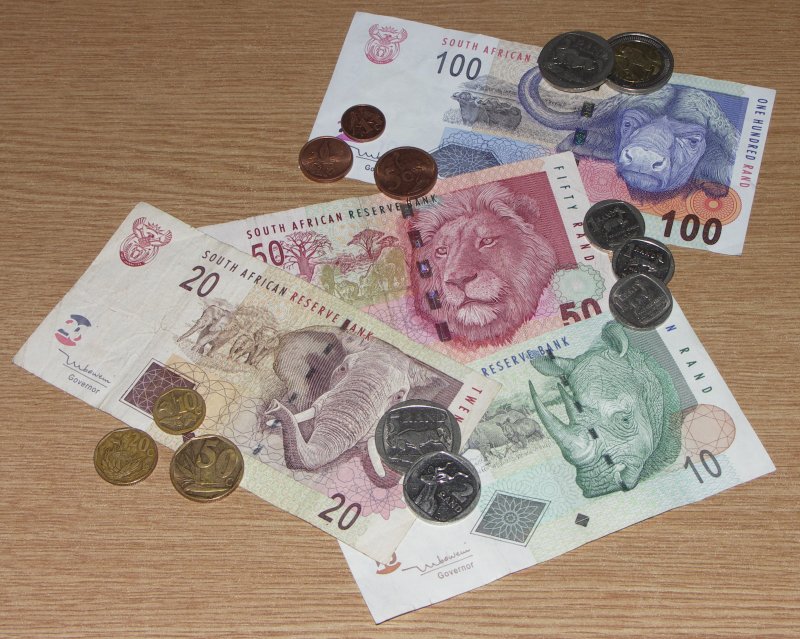
In a major step toward strengthening capital markets and unlocking private sector growth in emerging economies, the World Bank Group, through the International Finance Corporation (IFC), has partnered with Citi to establish a 1.6 billion South African rand (approximately $85 million) borrowing facility.
The landmark agreement is designed to expand IFC's ability to provide local currency financing in South Africa—an increasingly critical tool for mitigating currency risk and accelerating sustainable investment in developing markets.
Scaling Local Currency Solutions for Development
The new facility marks a significant expansion of the World Bank Group's local currency financing toolkit, reinforcing its broader strategy to deepen domestic capital markets and support long-term private sector development.
"Local currency financing and capital markets development in emerging and developing markets are critical priorities for the World Bank Group," said Jorge Familiar, Vice President and Treasurer of the World Bank Group. "This facility demonstrates how strong private sector partnerships can deliver innovative financial solutions—from outcome-based bonds to local currency instruments—that drive job creation and economic growth."
By enabling financing in South African rand, the initiative reduces exposure to foreign exchange volatility—a persistent barrier for businesses and investors in emerging markets.
Powering Innovative Finance: A First-of-Its-Kind Outcome Bond
The facility has already played a catalytic role in supporting IFC's anchor investment in the Cape Water outcome-based bond issued by FirstRand Bank. This bond is notable as the first outcome-based bond issued by a commercial bank globally—an innovative financing structure that ties returns to measurable social or environmental outcomes.
Such instruments are gaining traction as part of a new generation of development finance, aligning capital flows with impact-driven results in sectors like water security, climate resilience, and infrastructure.
Building on a Scalable Model
The South African rand facility builds on a similar agreement signed between IFC and Citi in 2024 in Kenyan shillings. Together, these transactions signal the emergence of a scalable model that could be replicated across multiple emerging markets.
"This facility deepens our partnership with the World Bank Group," said Stephanie von Friedeburg, Global Head of Citi's Public Sector Group. "Following our Kenyan shilling transaction, this rand-denominated facility demonstrates a model that can be expanded across emerging economies, supporting local currency financing where it is needed most."
The two institutions have confirmed plans to extend this framework to additional countries, potentially unlocking billions in local currency financing over the coming years.
Addressing Currency Risk and Unlocking Investment
Currency volatility remains one of the most significant challenges facing private sector development in emerging economies. Many businesses rely on foreign currency loans, exposing them to exchange rate fluctuations that can undermine financial stability and deter investment.
By contrast, local currency financing enables companies to borrow and repay in their domestic currency, aligning revenues and liabilities while reducing financial risk.
Experts say initiatives like the IFC-Citi facility are essential for:
-
Expanding access to affordable financing for businesses
-
Supporting infrastructure and climate-related investments
-
Strengthening domestic financial systems
-
Encouraging long-term private capital flows
IFC's Growing Impact in Local Markets
Over the past decade, IFC has significantly expanded its local currency financing operations, committing more than $33 billion across 71 currencies worldwide. This reflects a strategic shift toward building resilient financial ecosystems in developing economies.
The South Africa facility adds momentum to this effort, particularly in one of Africa's most sophisticated yet still evolving financial markets.
A Catalyst for Broader Market Development
Beyond immediate financing benefits, the initiative is expected to contribute to the deepening of South Africa's capital markets by introducing new instruments and attracting institutional investors.
"Deep and liquid capital markets are essential for sustainable development," the World Bank Group noted, emphasizing that such partnerships help create the financial infrastructure needed to support long-term economic growth.
Looking Ahead
As global economic uncertainty and currency fluctuations continue to challenge emerging markets, innovative financing models like this are likely to play an increasingly central role in development strategies.
The IFC-Citi partnership not only strengthens South Africa's financial landscape but also sets a precedent for how multilateral institutions and private sector players can collaborate to unlock scalable, impact-driven solutions worldwide.
ALSO READ
-
US Families Challenge Italian Citizenship Law in Supreme Court
-
World Bank's $100 Billion Lifeline for Middle East Crisis
-
World Bank Aims for Massive Middle East War Relief Fund
-
Treasury Secretary Criticizes IMF and World Bank's Economic Forecasts
-
Treasury Secretary Criticizes IMF and World Bank's Economic Forecast Reactions








 Google News