



Parks Tau: B-BBEE Must Shift From Compliance to Real Economic Impact
Describing the session as a “landmark moment,” Tau said South Africa has reached a crossroads in its economic transformation journey.
- Country:
- South Africa
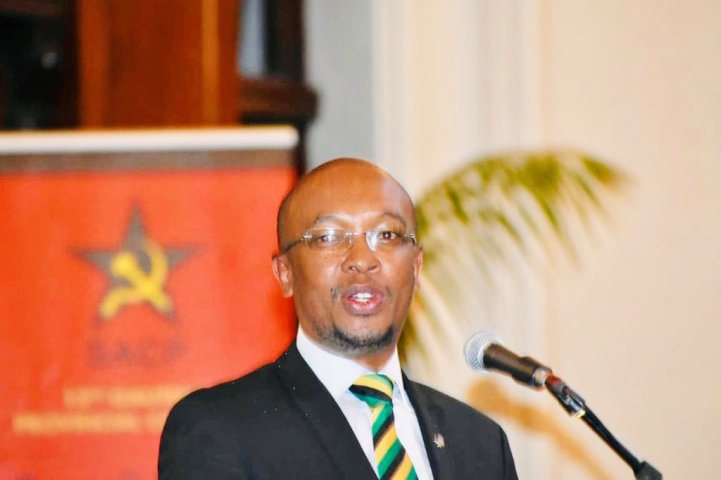
Minister of Trade, Industry and Competition Parks Tau has called for a decisive shift in South Africa's transformation agenda, warning that Broad-Based Black Economic Empowerment (B-BBEE) will only succeed if all stakeholders actively defend, implement and strengthen it.
Tau was addressing a historic joint engagement in Pretoria between the Department of Trade, Industry and Competition (the dtic) and all 11 B-BBEE Sector Charter Councils — the first time the councils have convened collectively with the custodian of the B-BBEE Act to assess progress and recalibrate strategy.
A Landmark Reset for Transformation
Describing the session as a "landmark moment," Tau said South Africa has reached a crossroads in its economic transformation journey.
"Crossroads are not places of collapse; they are places of choice. And now, choices must be made," he told delegates.
The meeting focused on evaluating progress made under B-BBEE, confronting weaknesses in implementation, and designing a more outcomes-driven and accountable framework that prioritises tangible economic shifts rather than procedural compliance.
What the Numbers Reveal
Data presented during the session showed measurable, though uneven, progress in ownership and management transformation:
-
Black ownership stands at approximately 29%
-
JSE-listed companies reflect around 31% black ownership
-
Black women ownership remains at about 12%
-
Management control ranges between 39% and 51%
-
B-BBEE transaction values have reached roughly R600 billion
"These numbers reflect a policy that has made a significant impact in undoing the injustice of the apartheid economy," Tau said.
"But transformation works when it is implemented. It fails when it is ignored or circumvented."
While the transaction value and ownership levels demonstrate progress, the relatively low level of black women ownership and persistent structural inequalities underscore the need for deeper, more inclusive reform.
From Box-Ticking to Outcomes
A central outcome of the engagement was agreement to transition from a compliance-driven approach to a measurable, impact-focused transformation model.
Tau emphasised that transformation must no longer be reduced to scorecards and numerical targets alone.
"We must ask what has actually changed in ownership, management, skills, enterprise growth and industrial capability," he said.
This signals a potential recalibration of the B-BBEE framework — shifting emphasis from formal compliance to demonstrable economic inclusion, enterprise development and sustainable industrial participation.
Skills Development Under Scrutiny
The session also examined the effectiveness of skills development spending under B-BBEE frameworks.
According to figures cited during discussions, more than R100 billion has reportedly been spent on skills development over the past three years.
"With that level of investment, we should not be facing the skills crises we see today," Tau said."Sectors must demonstrate tangible skills outcomes rather than expenditure alone."
The remarks suggest a forthcoming tightening of accountability measures to ensure that training spend translates into employability, productivity gains and industrial competitiveness.
A Three-Point Action Plan
Delegates reached consensus on a three-pronged action approach to strengthen transformation implementation:
-
Address funding mechanisms to unlock inclusive participation and enterprise growth.
-
Optimise implementation within the existing legal framework, ensuring consistency and enforcement.
-
Review institutional architecture where systems are failing or not delivering intended outcomes.
Tau stressed that the engagement was not confrontational, but corrective.
"We are not here to create conflict. We are here to fix what is not working, strengthen what is working, and ensure that transformation remains central to South Africa's economic trajectory," he said.
Cabinet Review and Ongoing Engagement
Feedback from the session will be consolidated and submitted to Cabinet as part of the ongoing review of the B-BBEE framework.
Importantly, delegates agreed that the meeting marks the beginning of a structured and continuous engagement platform between government and Sector Charter Councils — a move aimed at strengthening coordination, accountability and shared ownership of the transformation agenda.
"This is not the last engagement; it is the first in this format," Tau said."If this country does not transform, none of us will succeed."
As South Africa confronts slow growth, high unemployment and persistent inequality, the recalibration of B-BBEE toward measurable outcomes may define the next chapter of economic reform — and determine whether transformation delivers broad-based, sustainable impact.
ALSO READ
-
Thailand’s Economic Transformation Stalls as Reform Momentum Weakens
-
Yogi Adityanath Unveils Economic Transformation in Uttar Pradesh
-
Uttar Pradesh's Economic Transformation: From Bottom Three to Top Three
-
Meghalaya’s Ambitious Vision 2032: A Journey Toward Economic Transformation
-
PM says private sector critical for next phase of economic transformation, requests 'decisive response' from them.








 Google News