



ADB Signs Loan Agreements for Thailand’s Industrial Waste-to-Energy Expansion
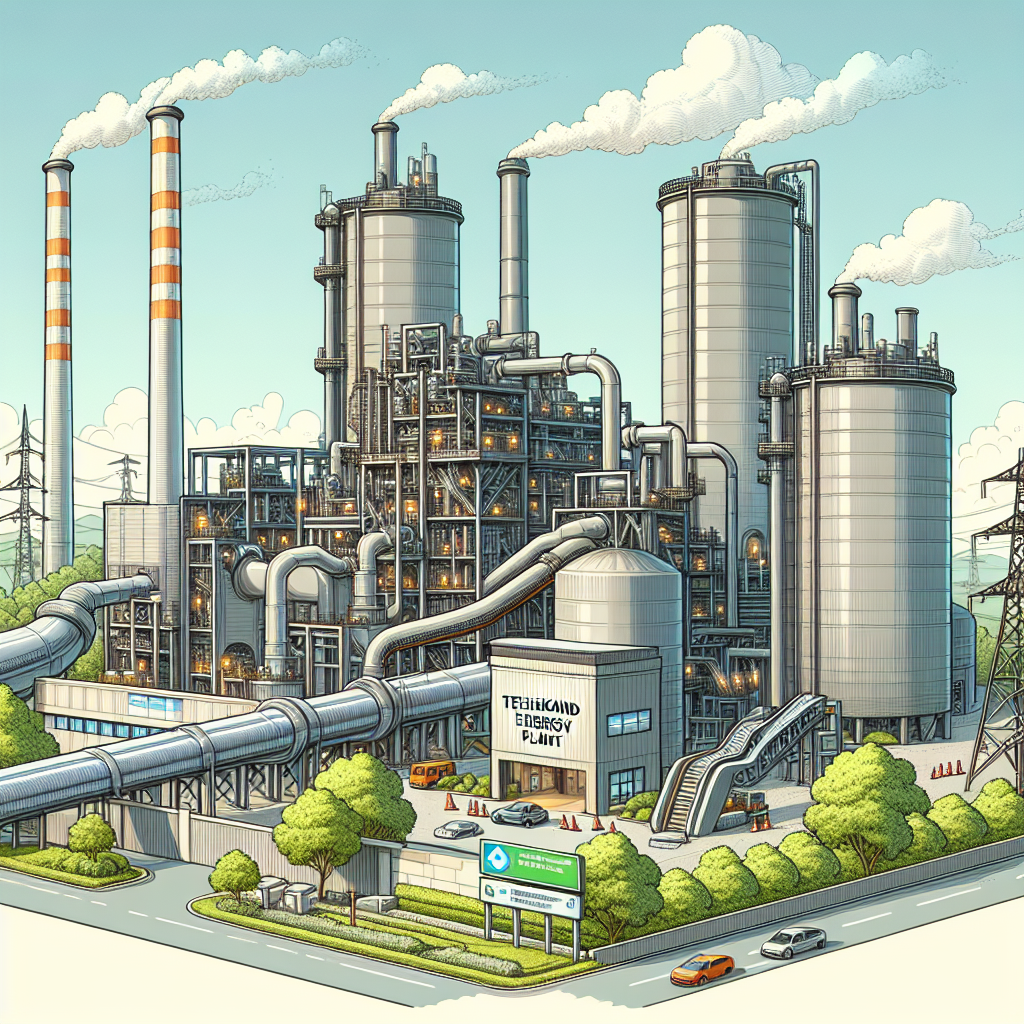
The loan package will fund the development, construction, and operation of 12 industrial WTE power plants with a combined contracted capacity of 96 megawatts (MW).
- Country:
- Thailand
The Asian Development Bank (ADB) has signed aggregate loan agreements totaling 16.6 billion baht (about $511.9 million) with 12 companies indirectly owned by Gulf Waste to Energy Holdings Company Limited (GWTE), a subsidiary of Gulf Development Public Company Limited (GULF).
The financing will support the development of Thailand's first large-scale industrial waste-to-energy (WTE) initiative, helping convert nonhazardous industrial waste into electricity, reduce landfill dependence, and curb illegal waste dumping.
Transforming Industrial Waste into Clean Power
The loan package will fund the development, construction, and operation of 12 industrial WTE power plants with a combined contracted capacity of 96 megawatts (MW).
The projects will be located in Thailand's central and eastern regions, which are major industrial hubs generating large volumes of industrial waste.
ADB said the initiative will promote sustainable waste management while contributing to cleaner energy generation.
Strong Private Sector Mobilization with Environmental Safeguards
ADB is providing 3.0 billion baht ($91.9 million) from its ordinary capital resources, while also playing a key coordinating role in the transaction.
As the environmental and social (E&S) coordinator, ADB mobilized an additional 13.6 billion baht ($420.0 million) from six parallel lenders.
This structure ensures that all borrowers meet the environmental and social standards required by both ADB and participating financiers, strengthening accountability and sustainability across the project lifecycle.
Supporting Thailand's Circular Economy and Waste Policy Reform
The financing aligns with Thailand's evolving waste management framework. In 2023, the Ministry of Industry introduced:
-
The polluter pays principle
-
A new waste disposal code holding generators accountable throughout the disposal lifecycle
-
Policies promoting certain nonhazardous materials as alternative fuels
These reforms support Thailand's 2nd National Action Plan on Waste Management, which positions waste-to-energy as a key solution for residual industrial waste.
Landmark Project for Southeast Asia
ADB Country Director for Thailand Aaron Batten said the initiative demonstrates the private sector's growing role in Thailand's circular economy transition.
"This project underscores the pivotal role of the private sector in driving Thailand's circular economy," Mr Batten said.
"This is the country's first large-scale industrial WTE project. By developing a bankable loan structure that reduces risk perception, ADB has helped build market confidence in the viability of large-scale WTE projects in Thailand and across Southeast Asia."
Major Environmental Impact by 2029
By 2029, the WTE plants are expected to divert more than:
-
600,000 tons of nonhazardous industrial waste annually from landfills
This will directly support Thailand's climate target of reducing greenhouse gas emissions by 30% by 2030, while also improving waste compliance and reducing illegal disposal.
Gulf Advances Waste-to-Energy Strategy
GULF Chief Financial Officer Yupapin Wangviwat described the financing as a turning point for industrial waste management in Thailand.
"This marks a turning point in industrial waste management by creating a scalable model that can be implemented across the region," she said.
"Securing this financing is a major milestone in our WTE strategy and reinforces our commitment to circular economy principles."
She added that the initiative supports Thailand's policy goals of expanding renewable energy in the power mix while ensuring industrial growth remains environmentally responsible.
About GULF and GWTE
GWTE is a subsidiary of GULF, whose core business portfolio spans:
-
Conventional and renewable energy
-
Infrastructure and utilities
-
Telecommunications and satellites
-
Digital businesses
GULF is Thailand's leading power generation company, with a total installed generation capacity of 16,504 MW as of December 2025.
Building a Scalable Model for Cleaner Industry
The agreement highlights Thailand's push to integrate circular economy principles into industrial development, using waste-to-energy technology to address landfill pressures while generating reliable power.
ADB and GULF say the project could serve as a blueprint for similar large-scale WTE investments across Southeast Asia.








 Google News